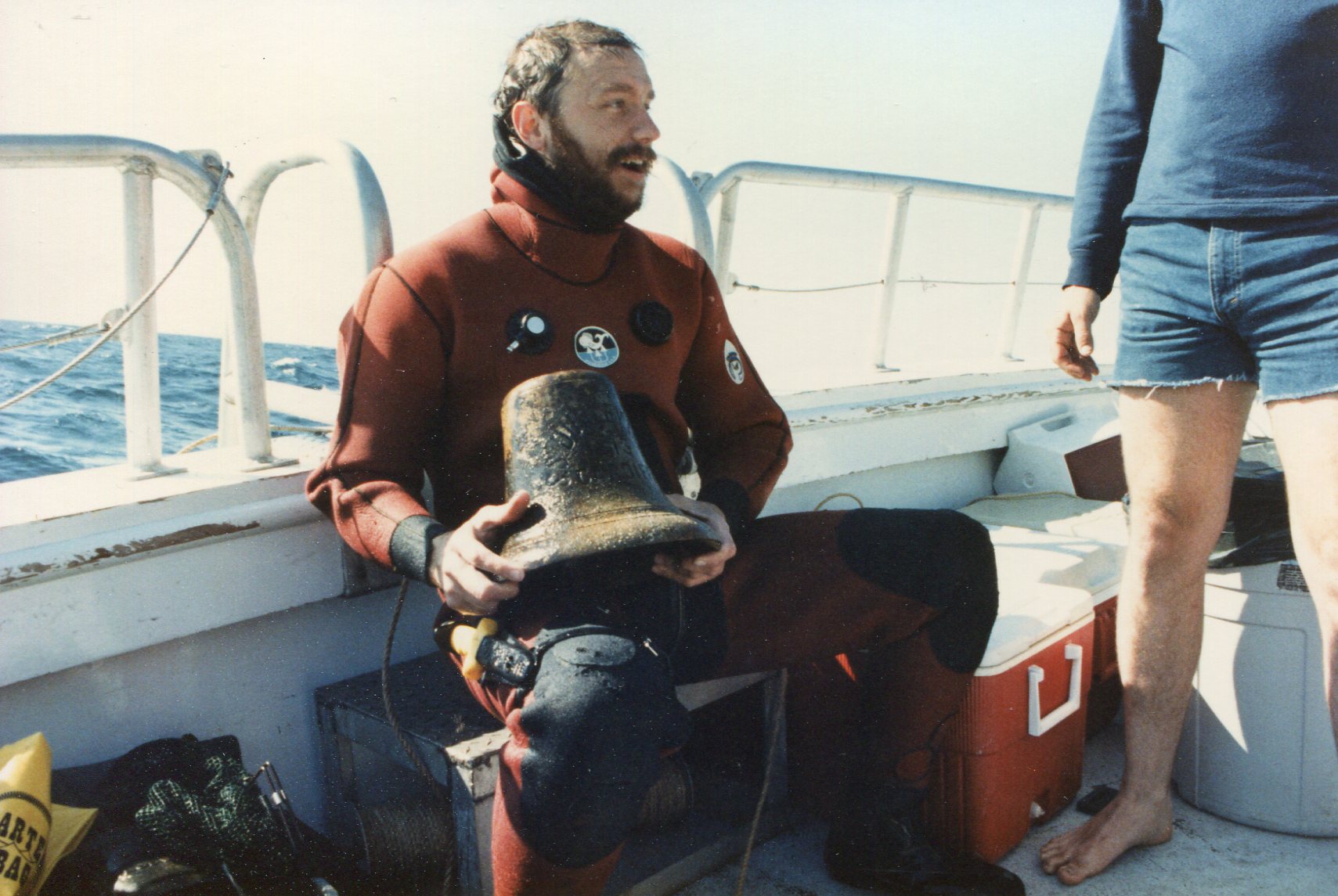
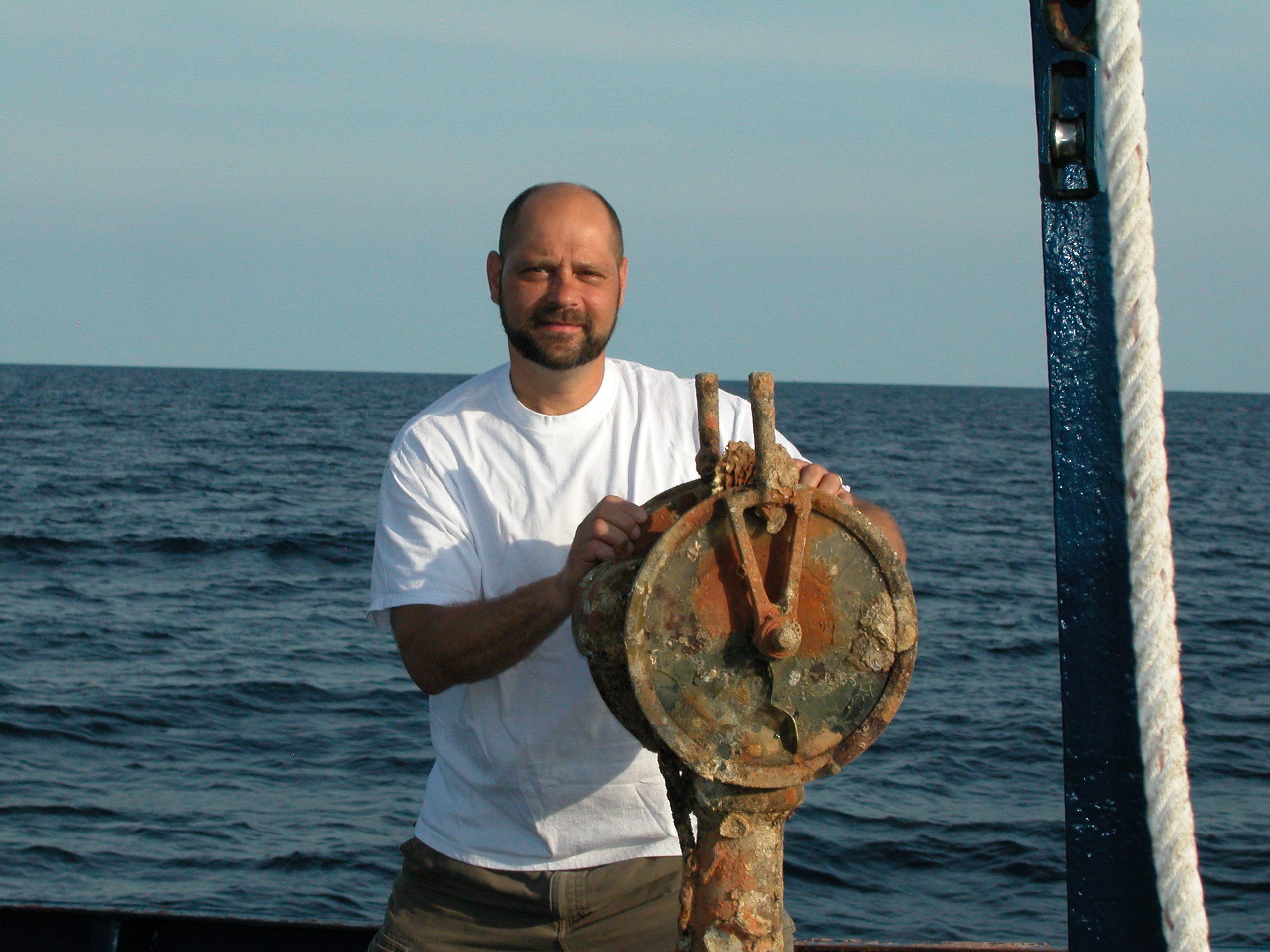
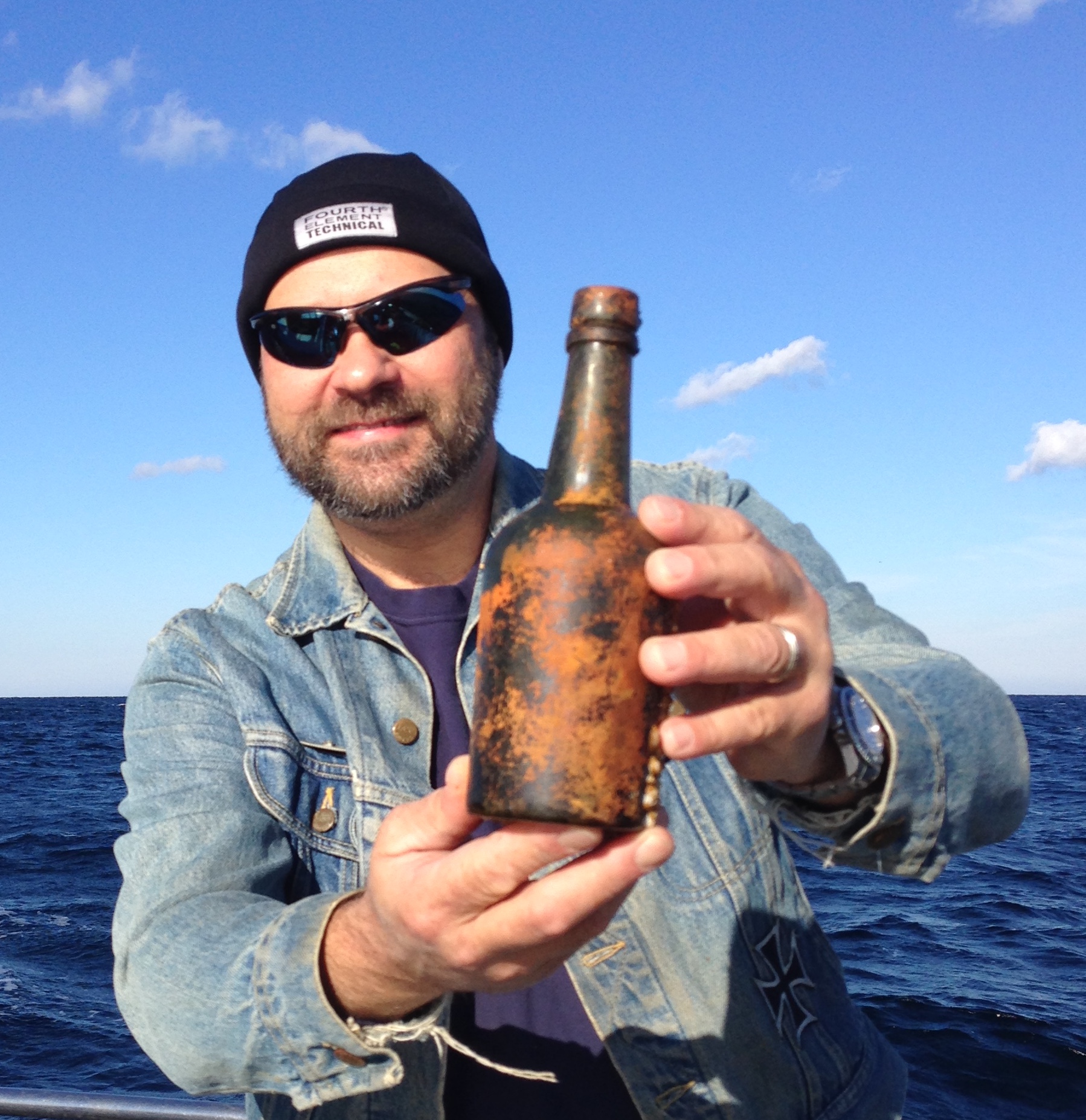
Well that’s certainly the question isn’t it? While exploring a new wreck you suddenly come across a (insert artifact of your dreams here: port hole, lantern, ships bell, or silver coin). Your heart skips a beat and you can’t believe your eyes as the reality sets in. You wave over your buddy who films it in place and once documented, you reach out to touch it but stop and think, can I take it or should I leave it? This is can be a legal, moral, social question, or” D”, all of the above. With the recent media attention to the recovery of huge amounts of treasure from deep water shipwrecks, the questions of wreck ownership, abandonment and legal variations of the children’s adage “finders keepers, losers weepers” are brought to world courts on a near regular basis. Don’t be so quick to laugh at the premise of “finders keepers”, it has been pretty much a globally recognized component of admiralty law since approximately 1160 AD and is the heart of salvers right to reap the rewards of their hard won discoveries and the lawful salvage of abandoned ships and cargos.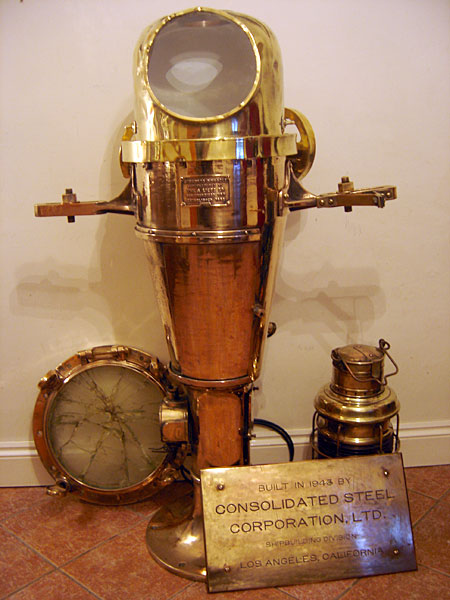
Legal Issues
Before you take that goodie there is a lot to consider,
- Was the vessel lost one year, one hundred years, or five-hundred years ago and what “exactly” constitutes a vessel’s abandonment?
- Was the wreck a warship or private vessel?
- Was it lost in some sovereign country’s territorial sea or sunk far from shore, in what is considered international waters?
Legal policy can be clearly written but not always clearly defined, and one country’s interpretations of law or claims of ownership may not be honored or respected in other country’s territorial waters. Many countries consider a shipwreck “abandoned” when an arbitrary period of time has expired in which no salvage attempt has been made, (usually between fifty and one-hundred years). Conversely; (and to their benefit), most governments will claim ownership of these same abandoned wrecks (in their territorial water) when they have been underwater between fifty to one-hundred and fifty years, claiming them as “historic” cultural treasures, regardless of the vessel’s nationality, origin or cargo. For wreck salvers, it would appear that the clock ticks quickly…find it, (legally) grab it, or lose it.
When it comes to military shipwrecks, (including aircraft, parts of ships and/or military equipment) whether lost in battle, storm, accidently, or intentionally scuttled, in international or sovereign territorial water, these remain the property of their government in perpetuity and are never considered an abandoned wreck, even if government that owned it is now defunct. A case in point would be German vessels sunk during both WWI and WWII; the successive German government has jurisdiction and becomes ward and owner. Most governments respect the sovereignty of other nation’s military shipwrecks, and some cases afford them special protection. The only exception is when a military wreck is specifically stricken from the record and sold off by their respective government for scrap or salvage, (although the United States no longer makes this distinction, even if the derelict wreck sank on the way to the scrapyard). If any military personal perished in the loss, then the site is further classified as a war grave and afforded special protection from salvers and even visiting civilian divers.
Can you take it?
 No apologies here, I am an avid collector of artifacts from shipwrecks. For me it was a natural transition as a young man from spear fisherman to artifact collector, it was just a different form of hunting underwater. In the late seventies and early eighties, shipwreck diving and artifact collecting in the New York and New Jersey area of the US, was in effect “the wild west” and the rule amongst wreck divers was “he who floats it owns it”. Oil tankers, freighters, schooners, tug boats and passenger liners all provided lobster, crockery and brass artifacts for those so inclined to locate collect and extricate them from the wrecks. It wasn’t until 1998, when a local wreck that had yielded many artifacts to local divers, the USS San Diego, (a WWI wreck abandoned by the government and sold for scrap), was placed on the National Register of Historic places and declared off limits to artifact collecting, that the specter of government intervention reared its bureaucratic head and “law” was injected into my hobby of picking up bits and bobs. Now fourteen year later, I look around and see quite a different social and moral outlook in the diving community regarding the collection of artifacts from abandoned shipwrecks
Depending on where in the world you are wreck diving, (and where you intend to land or return with any “salvage” taken from a wreck), there are laws that that may have already made the decision for you, and it is your responsibility to know what they are before you think about taking anything. Is this a known or unidentified wreck site? Is it one mile from land or in international waters? Lakes and rivers create a whole new set of legal issues of ownership as do terms like embedded. And then of course it may not abandoned at all, it may be owned, -yes owned-, by a government, commercial salver, dive club, insurance company or private citizen. Many wrecks worldwide are privately owned and even visiting them can be controlled or restricted by the owners. In fact, the law says that a wreck is still owned by its original owner no matter how long it’s been underwater; just because your property slips below the waves does not mean that you relinquished your ownership rights, even if you were a Phoenician fisherman in 2500B.C. Somebody somewhere, or their ancestor’s, still owns each wreck, unless you can prove that the original owner affirmatively abandoned their ownership interest. (Being separated from your property at sea, storm or torpedo does not count as an affirmative act of abandonment).
 In the UK, Ireland and Canada there is a government office known as the “Receiver of Wrecks” which monitors the disposition of shipwrecks in their area of control. That area of control is clearly defined and their office maintains records and publishes reports of ownership and discovery in the interests of both the divers and the owners of the lost vessels and cargo. Within the law it is permitted recover an artifact from an abandoned or unknown wreck site and then report it to the receiver of wrecks office. After due course; (basically a period of time in which no claim is made by an owner), the artifact may be yours to keep. If an owner steps up you may be entitled to a salvage fee for the recovery.
In the United States, wrecks that are located within twelve miles from shore fall into both federal and state jurisdiction. Under the somewhat vague and highly controversial Abandoned Shipwreck Act of 1987, any “Historic” shipwreck embedded in a state’s submerged lands or in a coralline foundation, (encased in coral) becomes the states property and subject to that state’s jurisdiction. But all is not lost, some states (like South Carolina) offer permits for divers to recover artifacts; (of course for a small fee) like bottles, fossils and the like, but it is clear divers are not to use excavation devices, damage or remove ships timbers, fittings, fastenings or machinery. Once again it is important to know what the law is and to keep up to date with the ever changing laws.
Moral Issues: should you take it?
From a moral perspective, many believe that wrecks like Titanic, with its great loss of life and historic significance to the social and moral conscious should be protected and not be disturbed. But many Titanic artifacts were legally recovered by a private salver. In a nod to this moral implication, the Admiralty court which awarded the salvage rights issued a caveat that the artifacts recovered were not be sold piece by piece, but preserved as an intact collection and displayed to the public. The thing is not all wrecks have the intense social attachment and historic significance of Titanic with its great loss of life, and not all artifacts are rare one of kind items that define an era or generation. Most of the artifacts collected by sport divers are ships fittings and everyday items that; (as I often point out to folks), you would walk right by in a thrift shop. But wrested from the mud silt or concretion, that broken teacup, twisted porthole or barnacle infused bottle are real treasures to the diver who saved them from obscurity. . One man’s pudding is another man’s poison and the line between coveted souvenir and junk is a thin and blurry line at best.
 Even when the wreck is abandoned in international water, some feel there is a social obligation to leave artifacts in place for others to enjoy. Unfortunately, not every wreck is as environmentally protected as in the cold fresh water of the Great Lakes in the United States, or in a unique marine reserve such as Truk Lagoon in Micronesia. All wrecks will eventually break down to piles of rust or the outline of ballast stones, ashes to ashes and dust to dust. Wrecks in the shallow littoral waters are dashed and broken down by the seas incessant action much faster, leaving artifacts mired in sand and silt, revealing them only to those who probe and dig into the muck and mire, under twisted beams, to find and recover them. As shipwrecks biologically implode, many items will certainly be destroyed and lost forever, other’s hidden from view and enjoyment. Take, for example, the fantastic dives in the 80’s and 90’s that others and myself had on the Andrea Doria; swimming into Gimble’s hole, exploring the bars, dining rooms and gift shop, picking up trinkets along the way. Now all of those places and artifacts lay under tons of twisted steel and exist only in memories and photographs of the few divers who visited her before the upper hull and decks collapsed. Stories like this like this repeat often, shipwrecks are not the static time capsule that some claim them to be. Even the Grand Titanic will one day be nothing but a rust stain on the seafloor, with blobs of worn ceramic and nubs of bronze poking through.
So the question is, if you can, should you take it or leave it?