
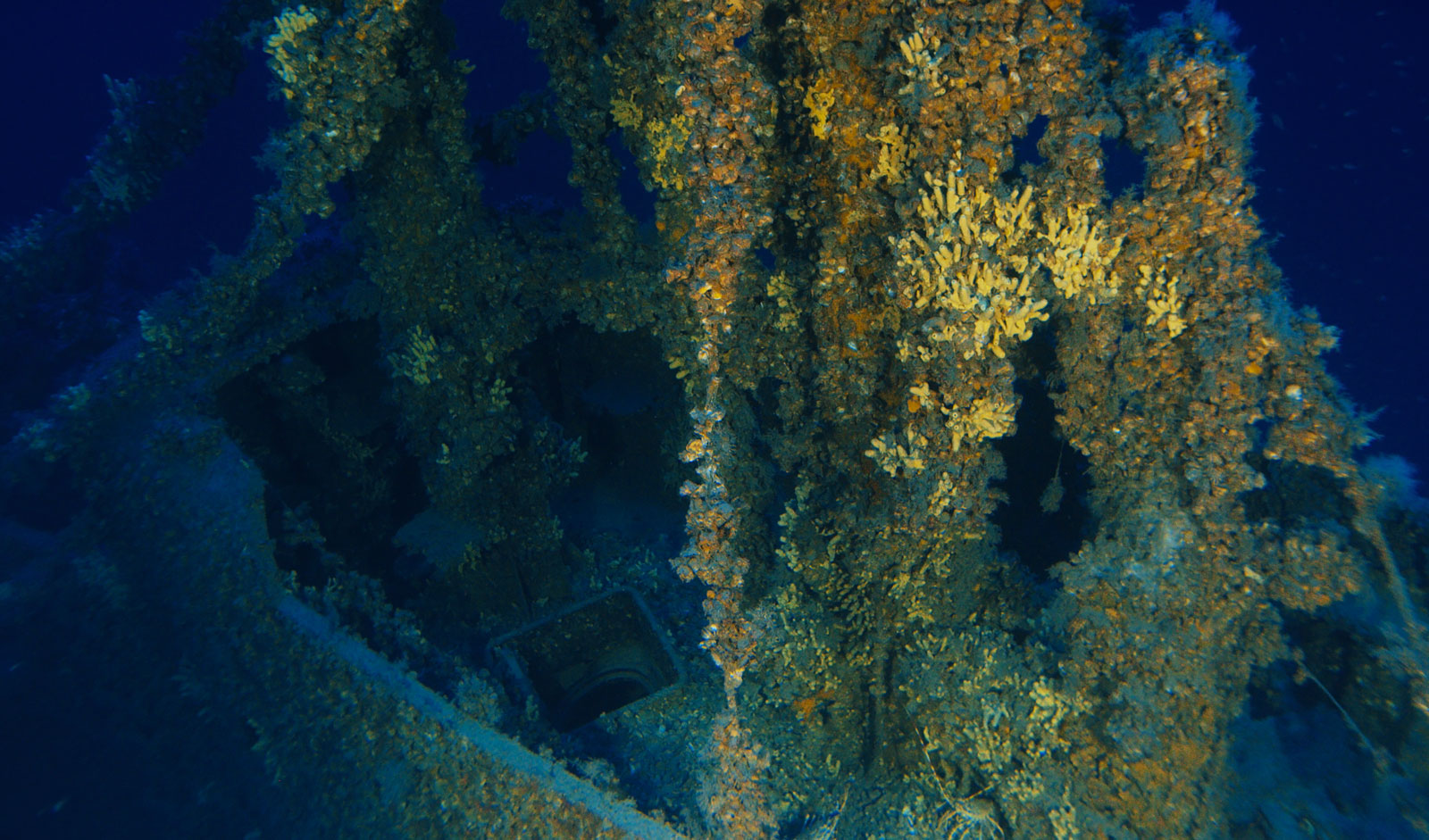
The dictionary defines the word “expedition” as “a journey of some length or difficulty for a definite purpose”, so a live-aboard charter to Chuuk could be described an “expedition” in the literal sense, but Expedition Diving is much more complex undertaking combining difficult logistics with tons of equipment and a dedicated group of technical divers.

Definitions vary by perspective and as I am primarily a shipwreck explorer mine is that Expedition Diving is a team driven project, generally in deep water, (300 ft+) requiring decompressing divers to have long in water run times for decompression, (4-8 hours). As such, the bottom divers cannot physically carry enough gas to be self-sufficient, (whether it’s the decompression gasses carried for for open circuit, or bailout gasses required for a closed circuit endeavor). Although bailout or required decompression or gas could be left on a line for ascending divers to use, (an acceptable practice in cave diving, when there is only one way back out of the cave system), without support divers this is NOT a safe practice in the open water environment. Anchor or down lines can sever, divers can be adrift and separated, boats fail to start and surface conditions change, all leading to the point where staged gasses could be inaccessible to those who need them. In water support divers are a must have component of any expedition dive plan.
Expedition dives are focused on specific goals, being organized and planned months in advance, with famous deep water shipwrecks like the Lusitania and Britannic expeditions being prime examples of successful expedition programs. A detailed dive plan or SOP (Standard Operating Procedure) is drafted, outlining EVERYTHING related to the project, from initial mobilization to post dive breakdown. All possible logistical, equipment and operational considerations are recognized and addressed. Gas calculations, material requirements, and emergency protocols are planned with layered support and backup. The SOP must clearly guide the team through the expected and emergency (oh crap) situations and account for the physical and material requirements needed to get the bottom divers back to the surface regardless of the what, why, when or where. No matter how well you plan and prepare, once heads are underwater there is always inherent risk. The million dollar questions are where to draw the line and how much risk is acceptable?
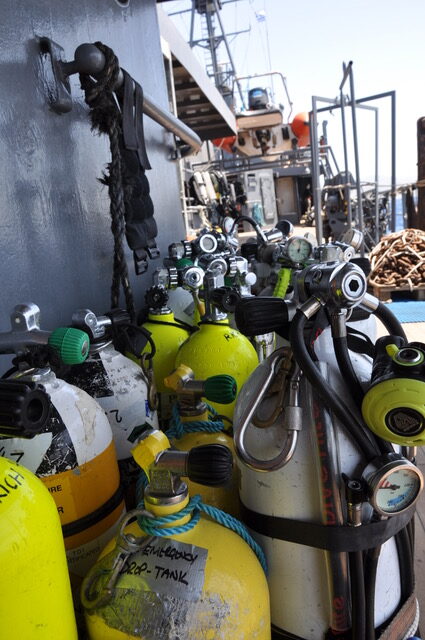
Years ago prior to my first expedition type dive, I always carried all the gas I needed to make a dive, leaving nothing to chance. Gas waiting on the anchor line, under the boat, or even the dive boat itself for that matter, may not be there when I needed it and so it couldn’t be counted on when I planned my dive. Eventually my open circuit trimix dives hit a wall, as I was limited by how much gas I could carry and the risk I was willing to assume. On really deep open circuit dives, it was believed by some that a buddy could be more of a liability than a benefit when the gas you’re carrying is already in the margins. Back then most of the time I chose to dive alone and if someone did have a gas problem, we simply didn’t carry enough gas for two. Comfortable in my gas management, it’s a risk I was willing to assume. But by pushing that line, something really bad was going to happen. I’ve been jumped twice by out of air divers on Andrea Doria expeditions. The first time it happened I was blindsided and nearly drowned, having never seen it coming. The second instance I saw the diver coming at me, hand slashing across his throat. But despite my offer of a backup regulator, I was bowled over and he yanked the one out of my mouth. In both cases, emergency gas was dropped over the side of the dive boat and both only suffered bruised egos and made the captains “boats full list.” Both incidents occurred at twenty feet under the boat during the decompression phase of the dive, and it seemed it was only a matter of time before someone had a major gas issue at depth.
That cold reality hit on a 280 ft dive after having just located the German U-boat, U-215 on the Georges Banks 150 miles off Shelburne, Nova Scotia. It was a fantastic dive, everything had gone well during the bottom phase of the dive and I was elated, that is until I noticed the other two members of my team were buddy breathing on the ascent. The tide had turned and was roaring and it was everything we could do to hold on to the down/ascent line. A pea soup fog had come in, so our planned drift deco had been flagged without our knowing. Our one support/safety diver had a problem (with his then new-fangled CCR) and so he never splashed, and everyone topside was unaware of the drama unfolding with the gas management issue below. The boat captian was much more concerned with the fog and possibility of losing his divers at sea so no one was sent in the water to break the line free for our drift decompression or even check on us! When it rains it pours. Splitting one cylinder of deep deco gas, the pair barely eked out a marginal profile, surfacing a little pale but none worse for the wear. When I surfaced, every gauge I had was in the red, and had I been asked for gas, I had none to give. The ripping current had forced me to work harder than planned and exacted a toll on my gas supply taking my safety margin of gas to the red-line. That’s as close to the line as I ever want to be. Something had to change in my planning and execution for these type of deep dives.
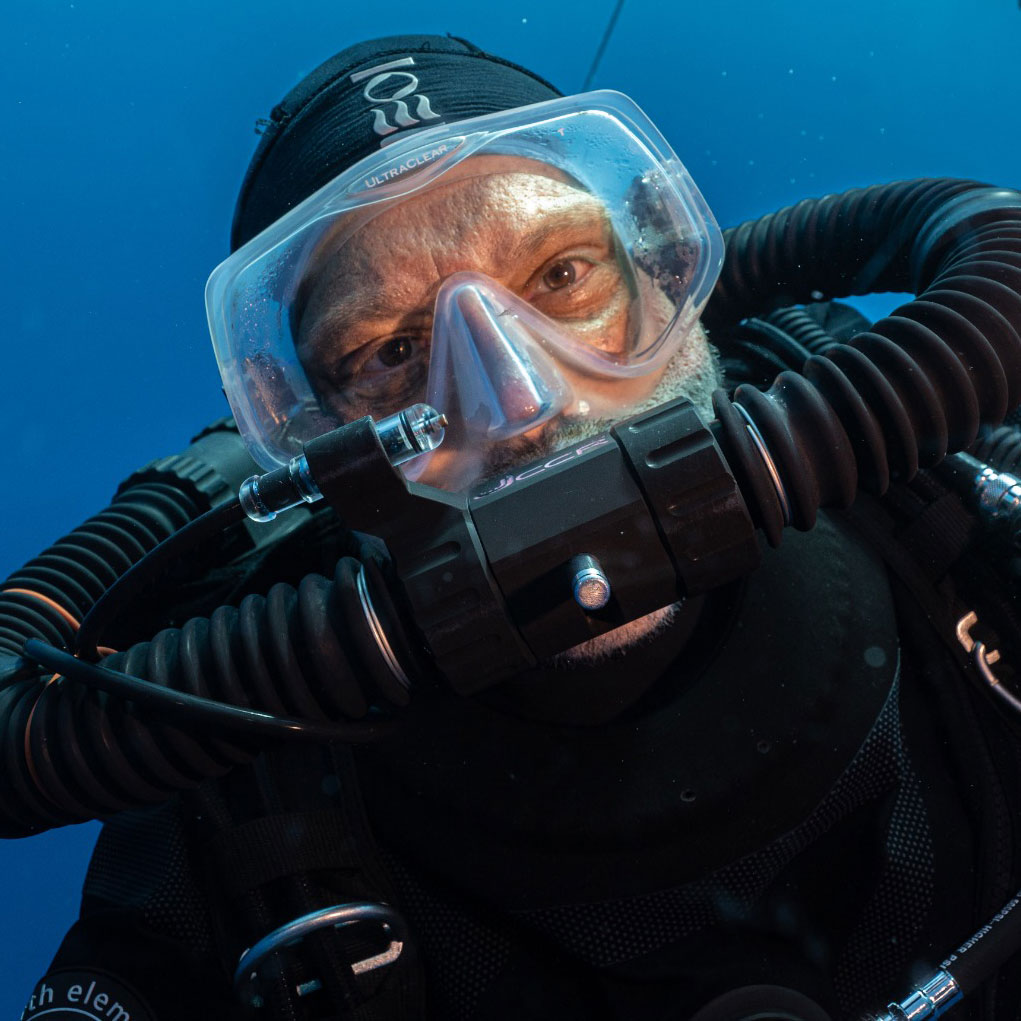
My switch to a closed circuit re-breather provided me quantum leap in range, but required a total reworking of technique and philosophy. Like a new open water diver, the importance of a dive buddy returned but with new significance; the bailout gas carried by a buddy is factored into my dive/emergency plan, as my bailout is into his. We are partners now and on deeper dives three to four divers with a communal bailout gas plan is not uncommon, but requires a much greater obligation to stay together, a far cry from “same dive, same ocean” mentality of days past. As a member of a CCR dive team, I have expanded my available bailout and make a commitment to accept the risk limits of my partner’s. With CCR we are now making amazing dives, but the limits of how much bailout gas a team can carry and the amount of risk we are willing to assume still exists.
A major component of Expedition Diving is the support divers, whose single most important task is to provide gas (or back up CCR) to bottom divers in a major unit failure. Layered support provides the ability to handle multiple situations so that no matter what issue or combination of problems arises, the decompression phase is uninterrupted and as stress free for the bottom divers as possible. Besides their assigned jobs for a normal or planned dive, emergency scenarios such as diver adrift, gas loss, electronics failure, loop flood and even an unconscious diver are discussed and prepared for with a planned reaction and assignment. Everyone clearly knows what is expected of them in case of a problem. Long runtimes clock out the OTU’S and a CNS oxygen toxicity seizure during the long decompression phase is a very real possibility. Support divers are in the water with the dive team during the entire shallow decompression phase, diligently monitoring them, ready to lend assistance and surface a convulsing diver. The number of support divers, (deep, intermediate and shallow), is determined by the gas needs of the bottom divers, environmental conditions, and the size of the dive platform. It’s important to add that having more support divers in the water is not always better.
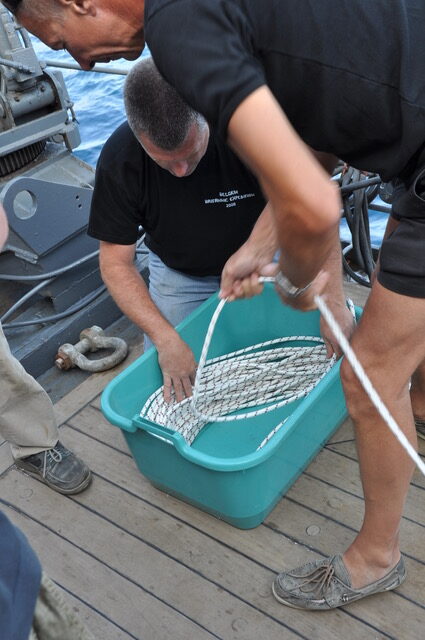
The Dive Marshall (aka; Diving Supervisor) is the “go to person” running the dive operation topside; liaising with the captain and support crew, tracking all diver’s times and assigning tasks to support divers as required by schedule or emergency. In short the DM is the final word on everything that pertains to the dive. Mirrored after military and commercial operation’s, the SOP and its command structure is designed to control all activity on the back deck, ensuring that all aspects of the dive operation are monitored, and provide a clear and concise emergency protocol if needed, all with a nod to the limits of a sport diving teams resources.
This article is not intended as a draft for an SOP nor could I, in the limited space, list all the nuance and detail covered in a well thought out dive plan. There’s many ways to run an Expedition Dive and no single SOP that will work in every situation. The key is to HAVE a written plan which covers all contingencies and failures, distribute and discuss the plan with the team, assigning tasks and responsibilities for both standard and emergency operations. When I am questioned about how I execute these dives, or what gasses I would use etc., I often (half jokingly) say “don’t follow me, I aint leading” but the truth is we all follow in the tracks of previous explorers who push the envelope, and (hopefully) learn what worked and then expose, analyze and correct what didn’t. Each dive team needs to adapt their SOP to the unique set of conditions and parameters they face on their project. Where the footprints ended for the previous explorers, the next group of underwater explorers will push further.