

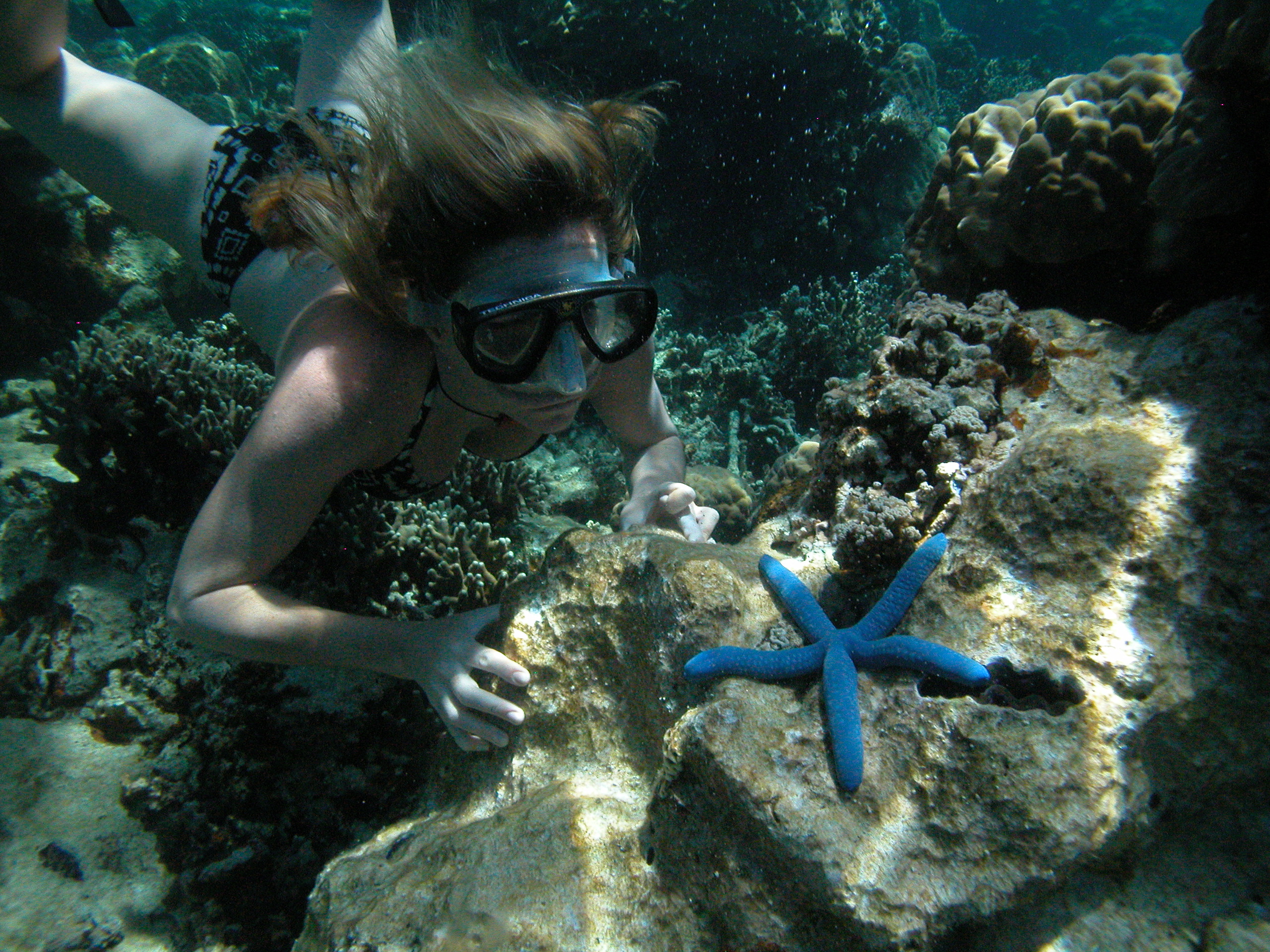
 The islands of Palau are exactly what you would expect of a tropical island paradise; exotic smells waft on warm breezes through a lush green jungle that blankets each island while thriving coral reefs explode with every imaginable color in the surrounding crystal clear water. Most divers trek here to explore phenomenal dives site like Blue Corners where sharks, turtles and other big ocean pelagic’s mix with schools of reef fish that move in the current along living canyons of coral, or German Corner where Mantas often fly by like a formations of fighter planes. But hidden underneath all the natural beauty, rusting under choking jungle growth, buried in dark claustrophobic caves or slowly melding into the surrounding coral reefs, are remnants from a dark moment in world history. As I look around Palau today and compare it to black and white photos from 1944, it’s hard to believe that this is the same place.
By the time World War II reached this remote corner of the Pacific theater, the entrenched Japanese had created nearly impenetrable fortresses on the Palauan Islands of Angaur, Peleliu, and Koror and used these bases as a supply and staging areas for their amphibious assault forces. Many military historians now believe that the invasion of the Peleliu was unnecessary and irrelevant to winning the war in the Pacific, and could have been bypassed entirely, left to wither on the vine as the war moved further westward into Japanese home waters. At the time, with the invasion of the Philippines imminent and key component to the American Island hopping strategy, Admiral Chester Nimitz believed it was imperative to destroy the potential threat that Palauan based Japanese troops and aircraft placed upon his fleet, and to General Douglas MacArthur’s scheduled landings at Hollandia, New Guinea
 The initial American air offensive called DESCRATE ONE, began in March 1944 with carrier based aircraft from the US Pacific Carrier Task Force 58 attacking military vessels, aircraft and merchant shipping. The operation sent many Japanese ships and aircraft to the bottom of the harbors and water surrounding the Palauan Islands, but did little to soften the resolve of the troops ashore. The next carrier strike occurred in July 1944 during operation SNAPSHOT, whose primary objective was to photograph areas of importance to the pending US invasion, as well as to destroy aircraft, shipping and defensive positions. The final major air offensive was in September 1944, as once again carrier-based aircraft launched pre-assault raids in operation STALEMATE II, weakening Japanese defensive positions and supporting the US First Marine Division’s amphibious assault of Peleliu.
The Marines ordered to capture the island faced a formidable task and had to deal not only with a resolute and battle hardened enemy, but with conditions that seemed to fight them every step of the way. Most of the island is solid coral, and the Marines could not dig in the hard rock to hide from the enemy fusillade, and with frequent rain and temperatures reaching 115 degrees it was said “there were as many casualties from heat prostration as from wounds. Original estimates believed the fighting would only last three to four days, but the sobering reality is that it took Marines two months of horrific fighting to take Peleliu and the Americans didn’t occupy the rest of Palau until the Japanese surrender at the end of the war. In the end the battle for Peleliu would cost the First Marine Division 1,262 dead and 5,274 wounded in one of the worst slaughters of US Marines in the Pacific theater. The Japanese defenders paid a high price as well, with 10,000 killed in action.
 Although nearly hidden by time, the debris of those battles are always close by in Palau; burned out tanks and rusted armored vehicles sit at crossroads or in the jungle where they died and the vine shrouded remains of both American and Japanese aircraft can be found interwoven in the jungle for those willing to traipse through the heavy undergrowth. But in the blue waters surrounding the island, there are many other bits and pieces of WWII history waiting to be explored by divers.
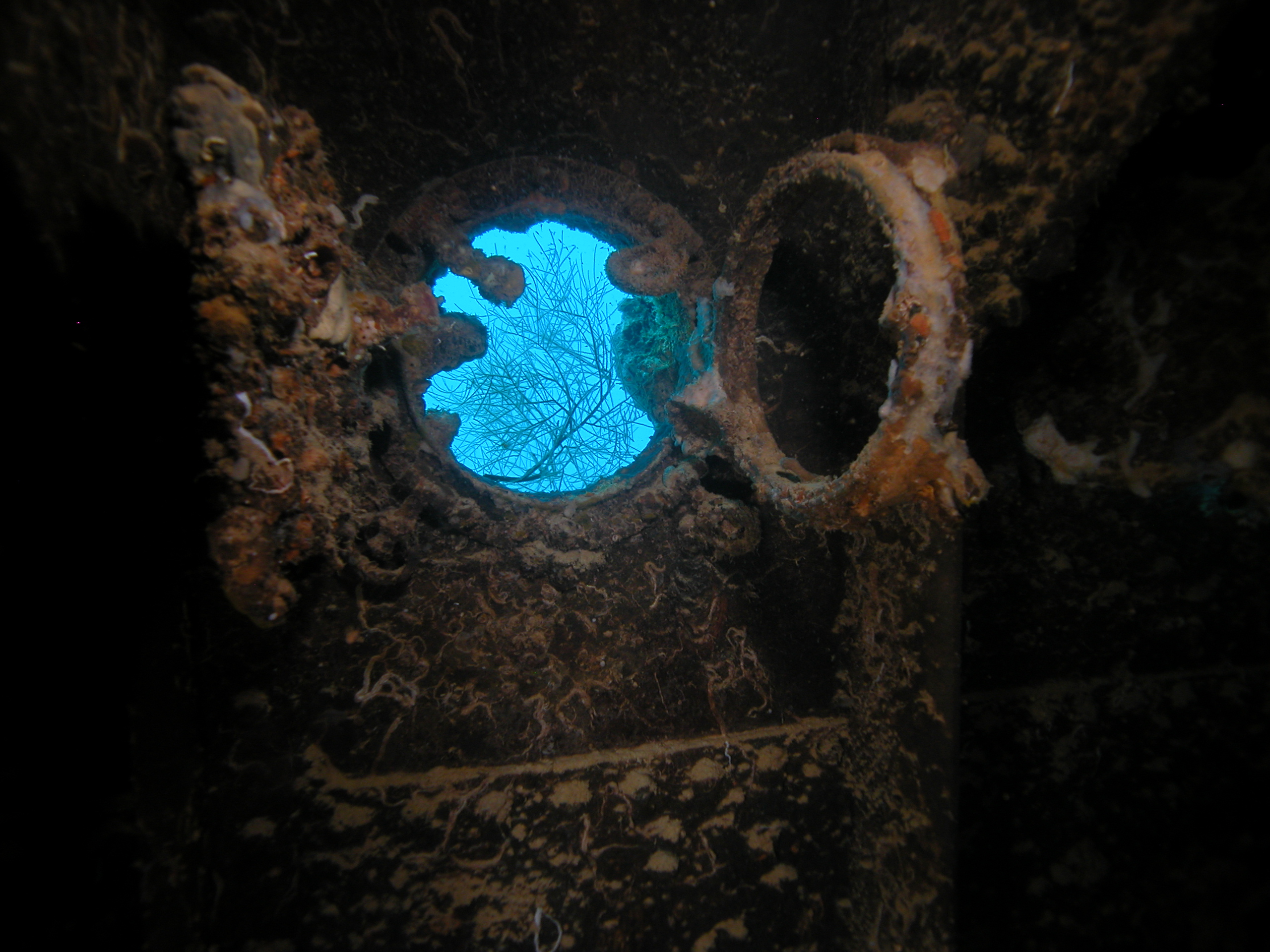
Being avid wreck divers, my wife Carrie and I set out to try and visit as many of these time capsules as our dive vacation would allow .The “Iro” is arguably the most famous and popular Palauan wreck dive and with good reason. This 470 ft/140m fleet oiler once provide fuel for the Japanese fleet but now it sits upright and intact right in the western Lagoon, just a 10 minute boat ride from the dock in Koror Harbor. The main deck can be reached at just 65 ft/20m from the surface and being the largest wreck in Palau it is impossible to see all this massive shop has to offer in just one dive. Inside the intact accommodation areas, you swim down long companionways as ambient light filters into rooms through open portholes and illuminates the remains of bathtubs and brass beds. I honestly could not get enough of exploring the interior of this wreck and the secrets they hold. Equally stunning is the overwhelming size of the ships proportions in the clear blue water. Both fore and aft a monstrous deck guns sit silent and impotent on circular platforms, dwarfing Carrie and she swims past. The huge masts, kingposts and deck cranes climb nearly to the surface and like the rest of this behemoth, are totally covered in soft sponges, sea whips, staghorn coral, giant clams and oysters.
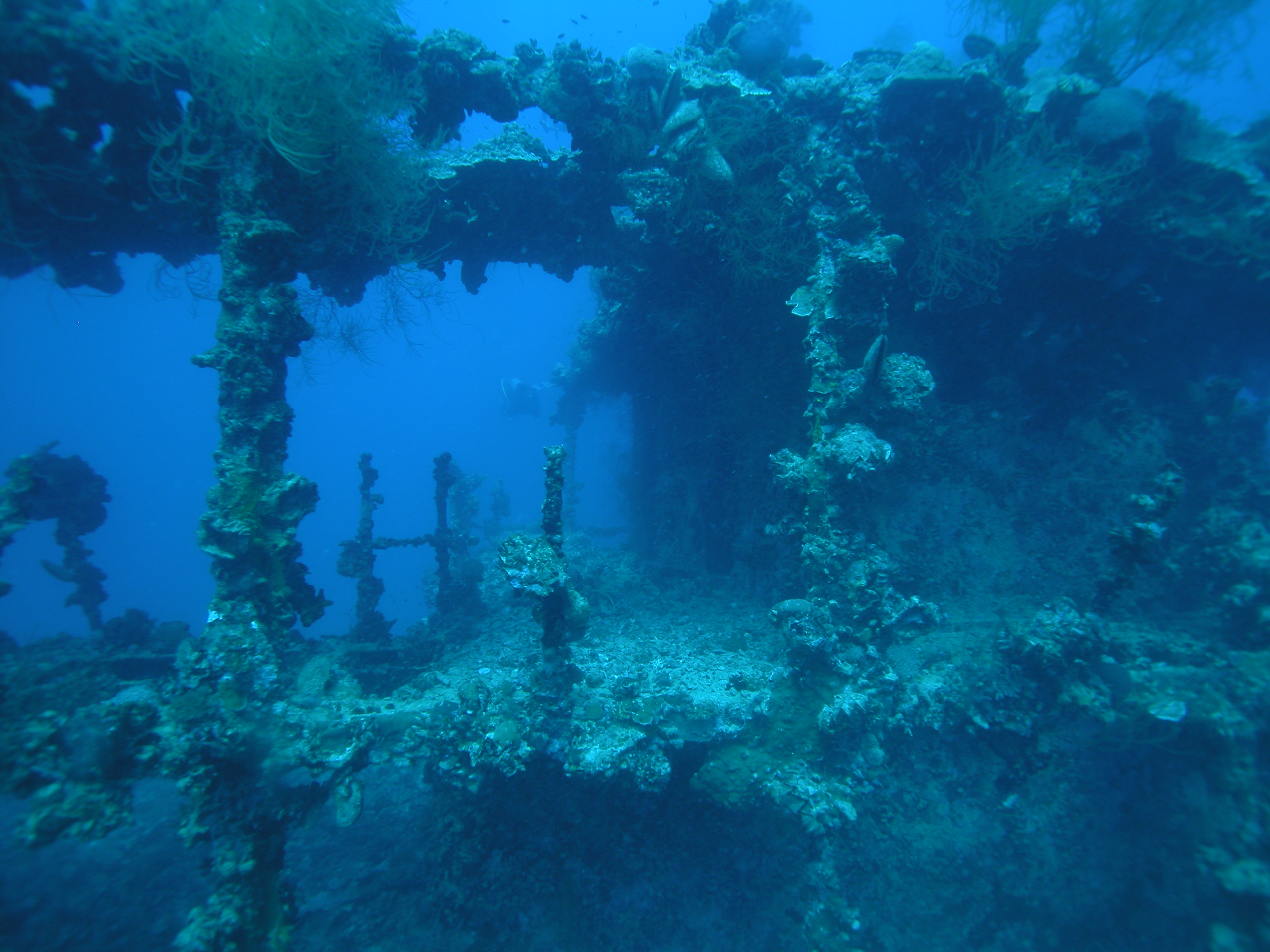
 The next wreck we explored was the “Bichu Maru” a 376ft/110m long army cargo ship also sunk in the Western lagoon. This ship lay’s almost all the way over on its port side with a sixty degree angle/list, which can be a little disorienting at first and make it difficult to navigate your way around. The starboard railing can be reached at about 30ft/10m from the surface. Poking our heads into what turned out to be the galley door and we could see stoves and a large rice kettle that once fed her crew and below the open door on the lower port side, we found various bits and pieces of china that had slid down out of the wreck and onto the lagoon floor as she sank. Forward of the galley, the open engine room is easily accessed and explored, a maze of pipes and valves disappearing deeper and deeper into the ship. Moving across the accommodation areas, huge ventilators jut out awkwardly from the deck. Forward of the bridge most of the upper decking is gone, either disintegrated or burned off when the vessel was sunk leaving a lattice work of steel support beams and the effect is reminiscent of an underwater jungle gym for divers.
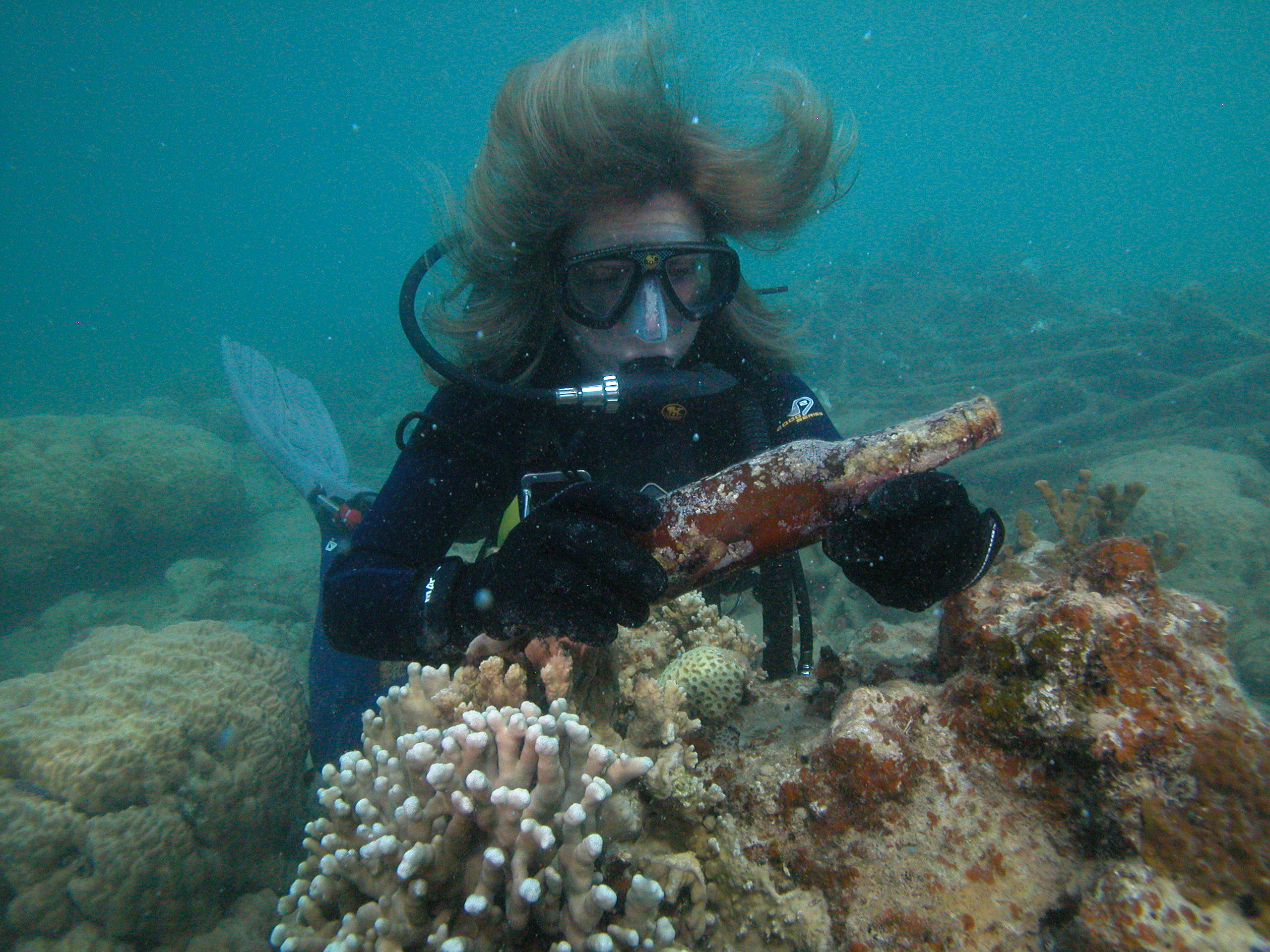
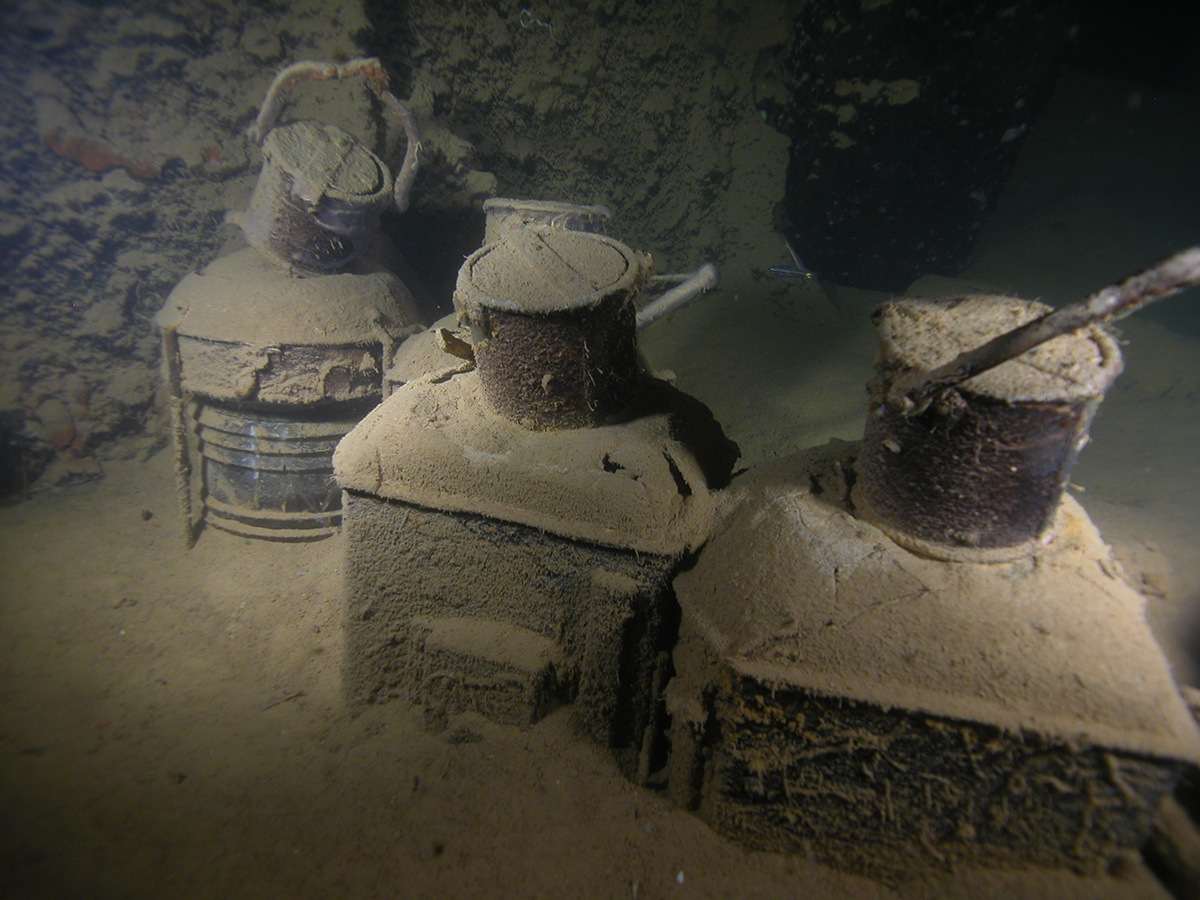
Located right in Malakal Harbor, just about with in sight of our dock, is an unidentified shipwreck is known only as the “Helmet Wreck”, so named because of the stacks of Japanese helmets found neatly stacked in her cargo holds. This small ship is only 189ft/58m long and lays on a sloping part of the harbor bottom. The stern can be reached at 50ft/15m but the bow drops down to 110ft/35m and that makes for an interesting dive profile. We started at the deeper bow and worked our way along the wreck, getting shallower in the process, and discovered that’s although she is a small ship, she was absolutely packed with interesting artifacts to find. Gas masks, sake bottles and jugs, china, assorted blue and brown blown glass medicine bottle’s, boxes of rifle and cannon ammunition, machine guns and stacks of depth charges are just some of the interesting things we located in the open holds and rooms. By the time we made it to the shallower stern of the wreck it was almost time to surface but a quick swim into a dark stern compartment reveled a row of brass lanterns sitting half buried in the silt.
The Chuyo Maru also sits right in Malakal Harbor even closer to the shore. Like many of the other shipwrecks here, the Chuyo was sunk at anchor in close proximity to the shore line which offered little protection against air attack. Like the other merchant vessels, the large deck gun sitting on its bow was also no help against the fast moving aircraft that sent her to the bottom. On the bridge the engine order telegraph lies across the skeletalized floor beams while the bronze helm stand still stands proud, its wooden wheel long gone. The engine room is a fascinating place to explore here, with intact catwalks and ladders to swim around as light filters down through the open skylights above.
For a change of pace, the next day Carrie and I decided to see a different type wreck. Heading out of the harbor and into the Philippine Sea to a shallow patch reef, our guide took us down to find a “Jake” seaplane sitting upright at 50ft/15m from the surface. The engine cowling and prop is slightly bent downward and the entire plane leans slightly to the right and you can see the pontoon under the wing. Most of the aircraft is intact, (there is still glass in sections of the windscreen!) and its. The dive boat then headed south east of Koror through the Ngel Channel and into the Pacific Ocean, to the wreck of the more famous “Zeke” or Zero Japanese fighter aircraft lying upside down in 65ft/20m. The visibility was so good you could actually see the entire aircraft from the surface. As we got closer you could clearly see the machineguns poking out from the wings and the retracted landing gear still closed up into the belly of this war bird. One blade of the prop sticks straight up and since the cockpit is totally buried in the coral its unknown whether or not the pilot was able to get out before the crash.
 Not all of the great wrecks we visited this trip required scuba gear; our guide took us to explore sunken fishing boats, military vessels and aircraft in the shallows during our surface intervals. These great sites provided Carrie and I with a lot of fun snorkeling between dives and were just as interesting to explore as the deeper and larger wrecks. At the total other end of the spectrum, the wreck of the USS Perry (one of two US warships lost in Palauan waters during WWII) lies at about 260ft/78m and this highly technical deep dive made my personal list of top ten wreck dives, but that my friends, is another story…