
I made joined two different expeditions to the wreck of the HMS Britannic. In both expeditions the call went out some of the top technical divers and underwater imaging experts in the world, and I was honored to work and dive alongside such talented people.
In 2006 John Chatterton and I assembled a team for the History Channel and this would be my first time to Britannic. John had been there once before in 1998 and was coincidently the first diver to explore the wreck on a closed circuit re-breather (CCR).

2006 History Channel Britannic Expedition
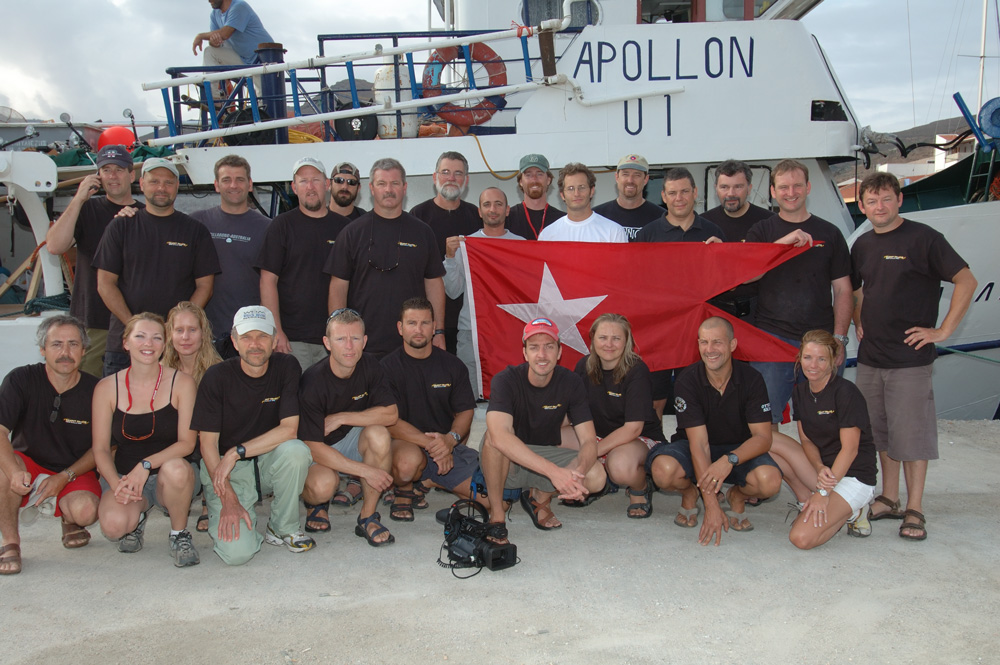
A dive trip to Britannic is by every definition of the word, an “expedition”. For those who have not taken part in such an event, it is by no means assemble your gear and “go diving”. Time, preparation, proper tools/equipment and team work is what is essential for success and a safe return. The 2006 History Channel expedition brought together fifteen world class ship wreck divers, with one common goal………to explore and document Britannic. The dive team consisted of myself and John Chatterton as expedition leaders, Martin Parker, Mike Etheridge. Leigh Bishop, Carl Spencer and Mark Bullen (UK), Edwardo Pavia, (Italy), Mike Fowler, (Canada), Evan Kovacs, Frankie Pellegrino, Mike Pizzio, Mike Barnette, and two shallow support divers Heeth Grantham and Joe Porter all from the USA.
With loss of her more famous sister Titanic, the launching of Britannic was delayed until finally on February 26, 1914, the White Star Line announced the newest Olympic Class liner would soon begin service between South Hampton and New York the following spring. The outbreak of the Great War (WWI) intervened, and the Britannic’s planned luxurious interior was never completed, but instead turned into military hospital complete with operating rooms, and large Red Crosses were painted on her sides to protect her from belligerents. She served dutifully in this capacity, ferrying wounded soldiers back and forth until on November 21, 1916, while steaming into the Kea Channel, Britannic was rocked by an explosion. Mercifully she had already deposited her cargo of sick and wounded earlier that day otherwise the death toll of 30 would have been even greater. Britannic now lies at a depth of 400 ft. in clear Aegean water and is considered by many to be the new Mt Everest for technical wreck divers around the world.
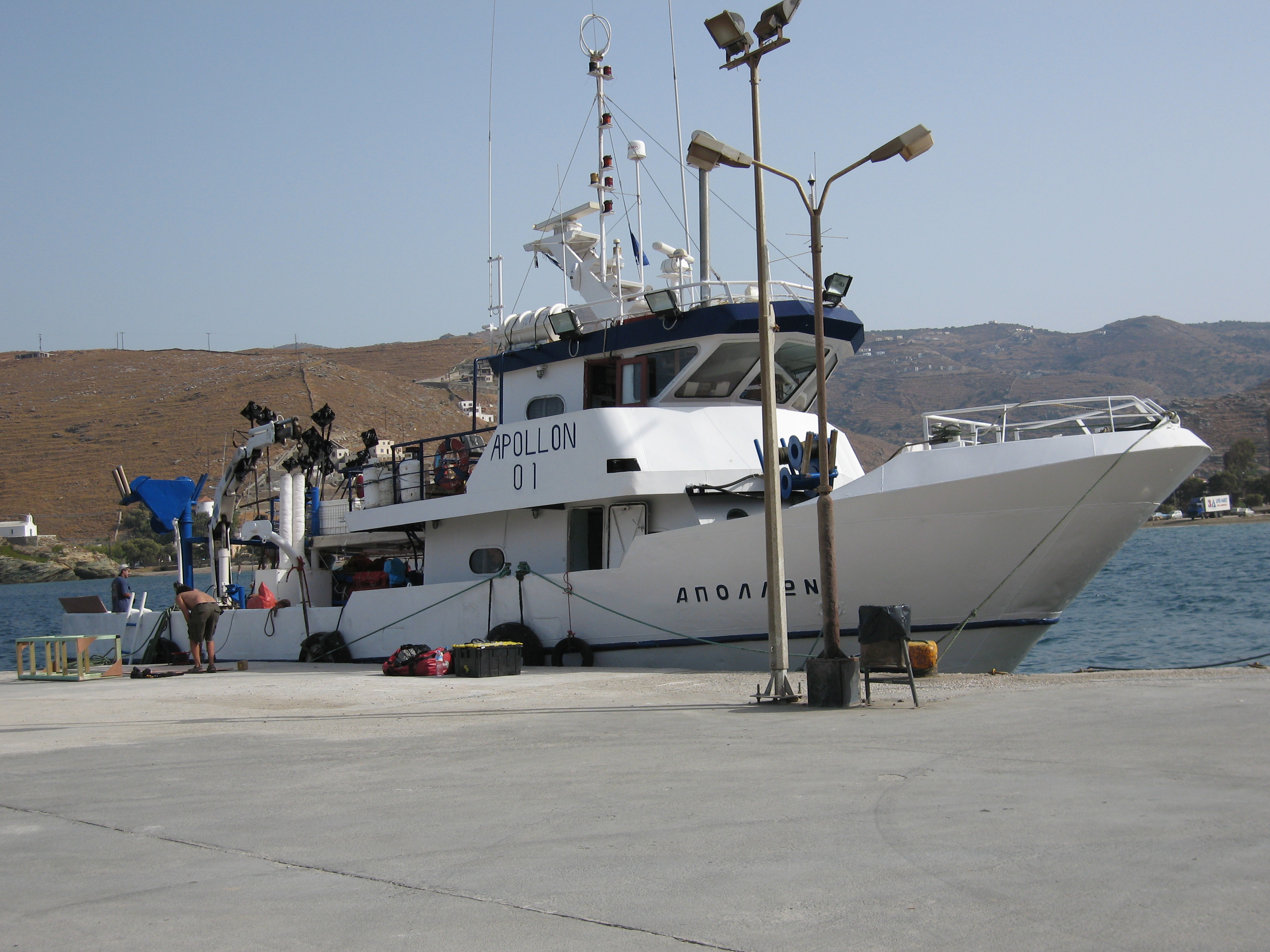
Before the History Channel team could get wet, Frankie Pellegrino and Mark Bullen used their appreciable carpentry skills to turn the Greek fishing boat “APOLLAN” into a technical dive platform, constructing benches, platforms and ladders. Since there is no dive shop to be found on the island of Kea, stage bottles and compressors had to be brought over by the UK and European contingent. Leigh Bishop and Carl Spencer not only drove across Europe in a truck packed with equipment and spares, but then helped assemble a technical dive center in a “lean to” shack on the island, no easy task under the best of circumstance. The majority of diving cylinders for both the rebreathers and emergency bail out were driven to Greece from Italy by Eduardo Pavio, when it was discovered that the aluminum cylinders we had rented from the Greek mainland dive operator were not fit to be used. Martin Parker of Ambient Pressure Diving and Mike Fowler of Silent Diving Systems were instrumental in providing loaner Inspiration and Evolutions rebreathers to the expedition leaders and film crew, in addition to providing an enormous supply of sofnalime (CO2 absorbant) for the entire dive team.
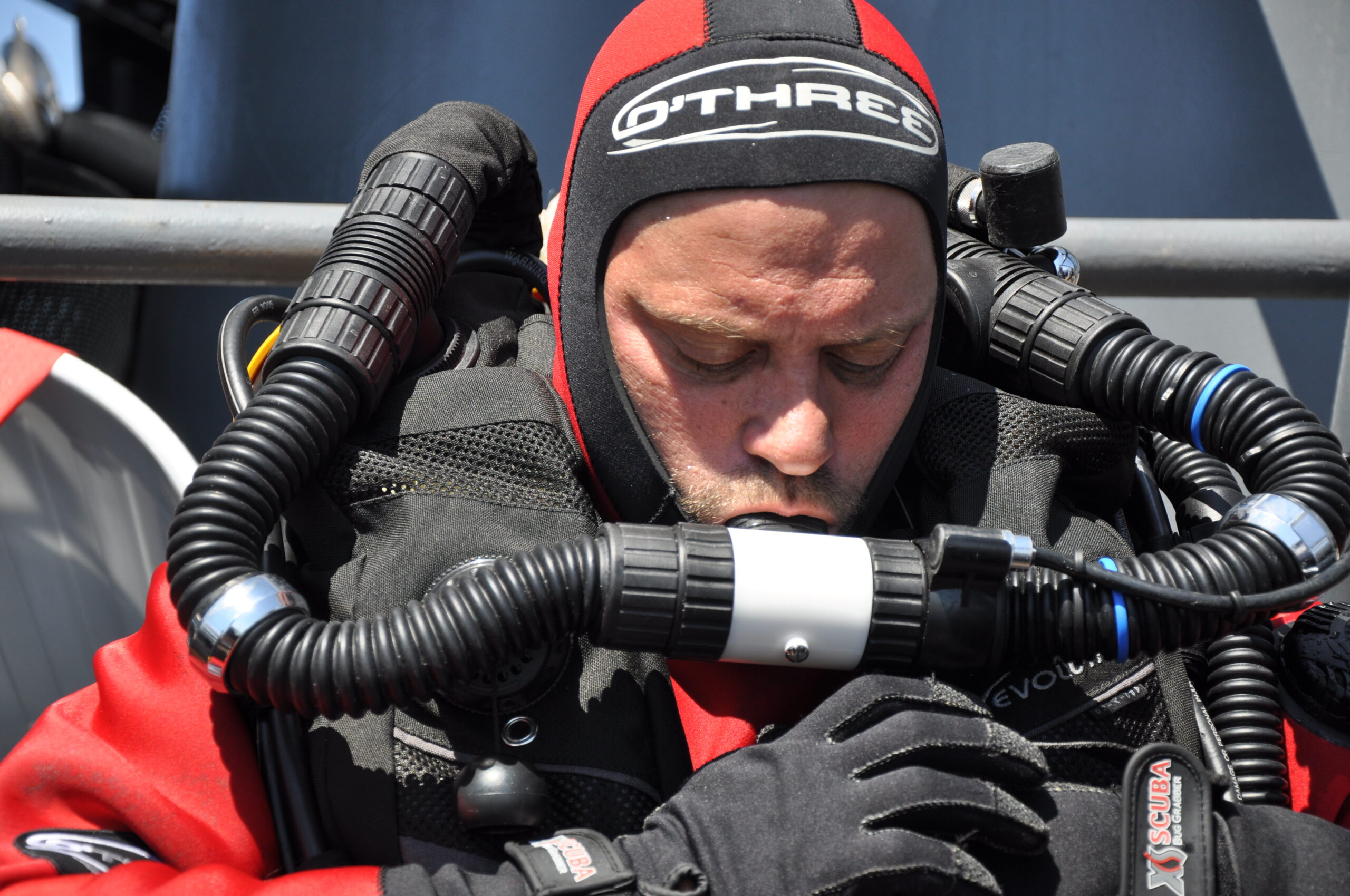
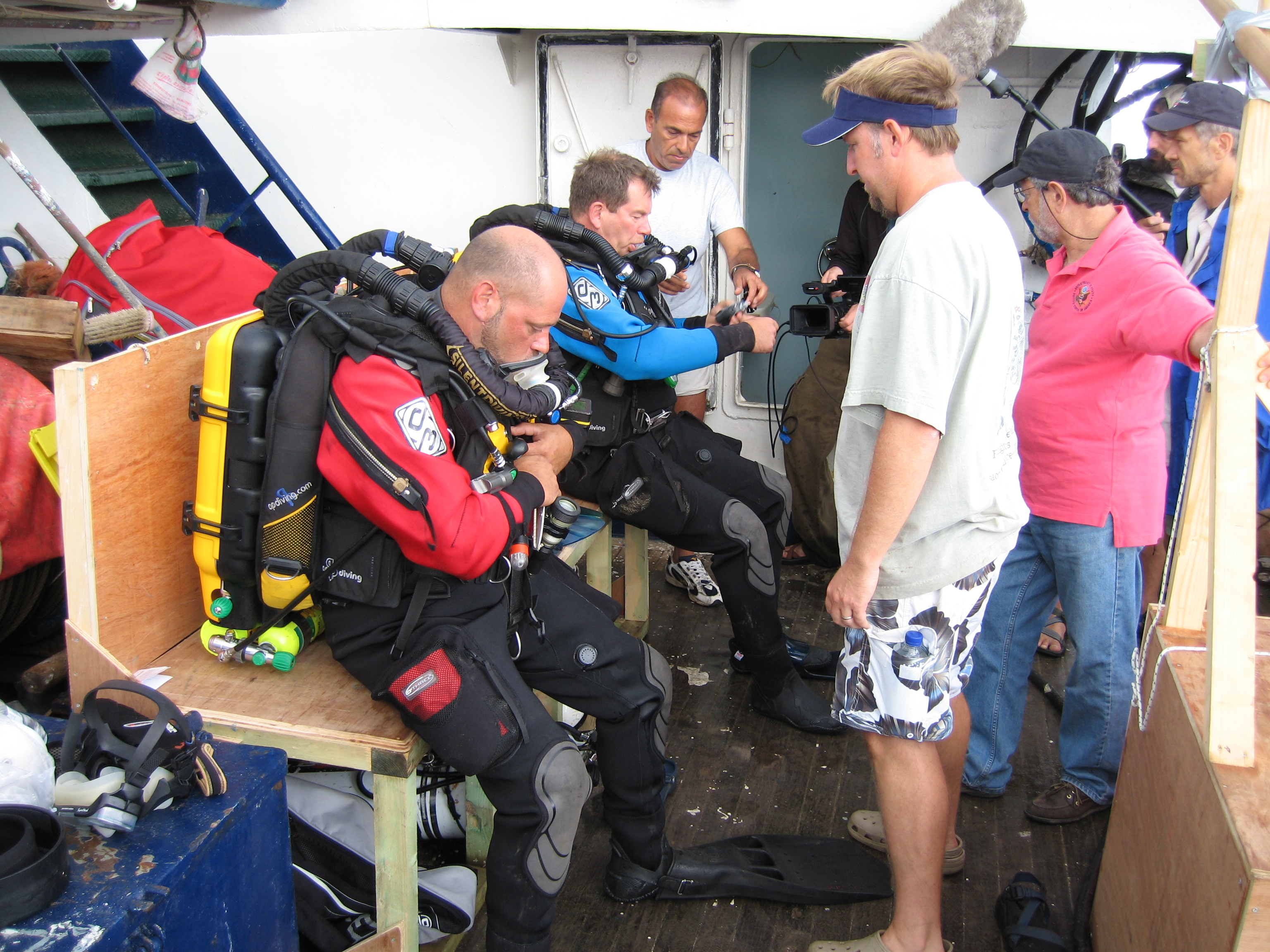
With the exception of shallow support, the entire team of bottom divers was required by both the Greek Ministry of antiquities and the wrecks owner, Mr. Simon Mills, to use closed circuit rebreathers (CCR). This was to protect the wreck and its anaerobic environment from divers exhaust bubbles that could otherwise accelerate deterioration on this historically important wreck. The use of closed circuit rebreather enabled the divers to accrue longer bottom times with less decompression obligation and arguably a much safer dive profile as each diver independently carried everything he needed to safely make the entire dive, not even remote possibility for an open circuit diver. Eight hour in water “run” times, though extreme, are very do-able when you are using a rebreather with the appropriate scrubber capacity. The types of rebreathers that were used in this expedition amounted to (10) Inspiration/Evolution’s, (1) Ouroboros, and (2) Megalodon’s, all of which worked flawlessly the entire project.
Everyone on the team pulled together, worked hard and made it happen. And not only the dive team mind you, but the topside film crew from Lone Wolf Documentary Group and experts like Parks Stephenson who is engineer and historian who specializes on the
Olympic class liners and Simon Mills, the wrecks owner and author of two books on Britannic. Each person helped load the boats every day, carry gear and equipment and assist in every capacity, truly a team effort. Although primarily a film expedition, other objectives for our team included the launch and recovery of numerous science experiments (both on the exterior and interior of Britannic) as well as submitting to post dive medical examinations by hyperbaric doctors from DAN, (Divers Alert Network) who accompanied our expedition. The 2006 Britannic expedition encountered many firsts. Areas of the wreck were explored that divers had not ventured to in previous visits and with the use of high definition cameras custom made specifically for this expedition by the Woods Hole Oceanographic Institute, (WHOI), this expedition captured stereo high definition footage of the wreck like never before.
DAN, (Divers Alert Network) was able to conduct its first ever “deep technical re-breather field study”. Because of the sophistication of the Vision electronics, and its ability to down load accurate dive data, the AP diving rebreathers were very instrumental in aiding DAN in conducting their field study supplying information as detailed as gas mixes, switches and decompression algorithms as well as the actual “black box” information of every second of the dive. Paired with an ultrasonic device called Doppler for measuring the post dive amount of bubbles in our divers, the combined data will be critical in the overall observations and findings, furthering our understanding of the effects of long decompression profiles.
By safely pushing the limits and putting our abilities as a team to the test the 2006 was a success, although a combination of bad weather, a bout of food poisoning, and a permitting issue cut down the amount of dives we were able to complete. We also did lose two camera systems; one topside camera dropped in the water from the boat and one underwater camera that flooded at depth. Despite each setback our team was able to get the hi-definition footage that answered our questions about Britannic’s design that directly related to her more famous sister Titanic, and successfully deploy and recover numerous science experiments in and out of the wreck.
A documentary film detailing this expedition was titled “Titanic’s Tragic Sister Britannic” aired on the History Channel in April, 2007. The 2006 expedition was also covered in great detail in Brad Matsen’s book “Titanic’s Last Secrets”