
Just seventy miles from Key West lie a tiny group of islands, set like gemstones that rise from the cobalt blue waters of the Gulf of Mexico. Discovered by famed Spanish explorer Juan Ponce de Leon in 1513, the low-lying islands are harsh and mostly barren, with only patchy mangroves and scrub brush to cover the arid coral outcrop. An unusually large abundance of sea turtles on the sandy beaches prompted the infamous Spaniard to name this small archipelago the turtle islands, or “Tortugas” and with no natural water to be found, the description “dry” was added to warn future sailors that there was nary a drop to drink. So the islets became known as the Dry Tortugas, which is the second oldest surviving European place-name in the United States.
Old Ponce went on to search for the ever elusive fountain of youth and as the years rolled by, the small island group bore witness to incessant European exploration of North America, and with them came ships and shipwrecks! In 1622 the Tortuga’s first recorded wreck was the Spanish Nuestra Senora Del Rosario, a 600 ton galleon lost in a hurricane while in route from Cuba to Spain. A hundred and twenty years later the HMS Tyger foundered here. Her British crew survived nearly two months of depredation on the dry atoll, battling starvation, dehydration and Spaniards before escaping to Jamaica in small boats. Over the next two-hundred and fifty years the Tortugas would become an American military base, a federal prison and currently a protected National Park. This remote outpost would see multiple wars, hurricanes, accidents and even intentional sinking’s that would commit stately sailing vessels, American submarines, German U-boats, battleships and steamships in the shoals and deeper waters of the Dry Tortugas.
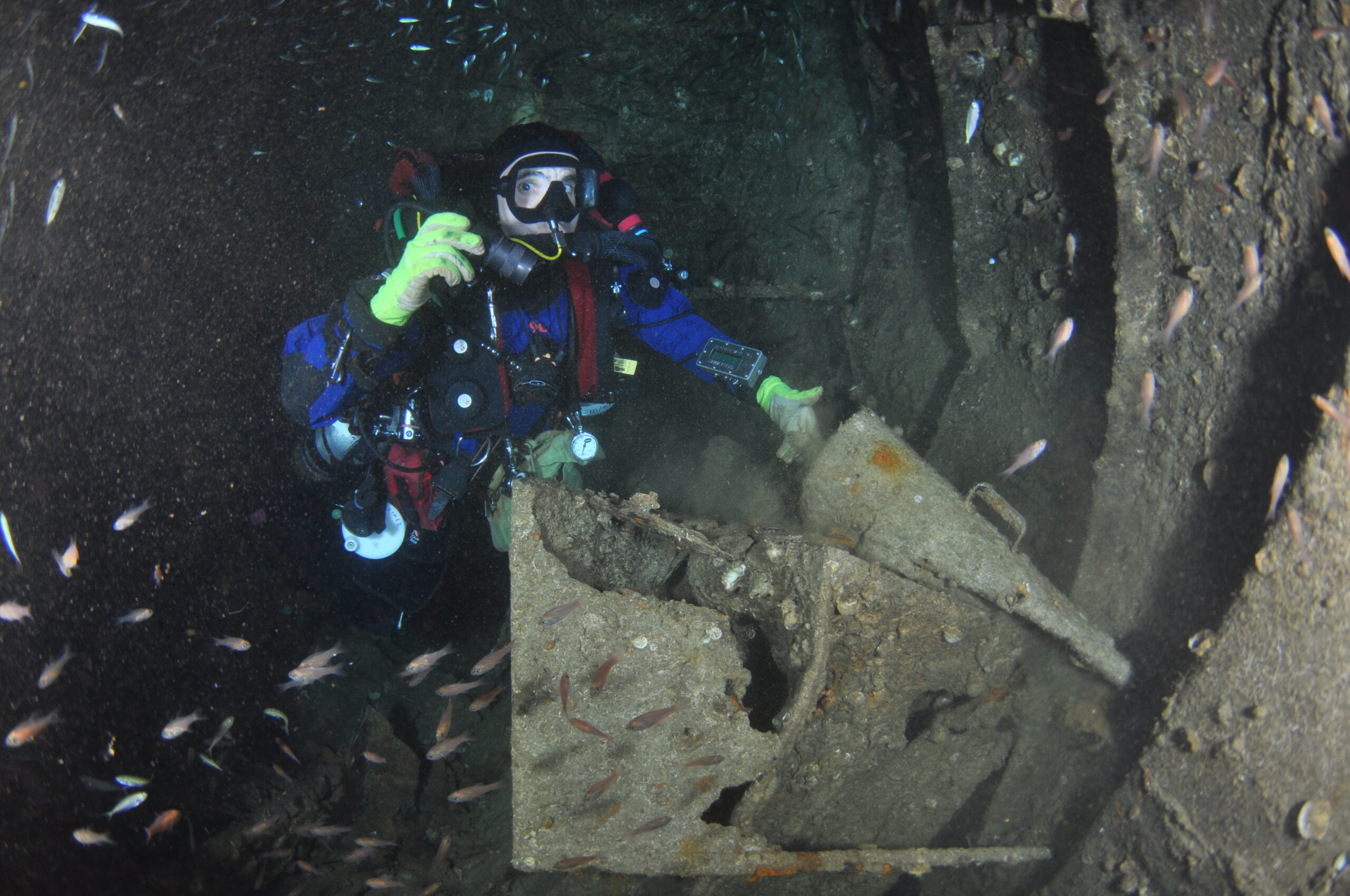
Over the past few years I have participated in many expeditions to explore the wrecks of the Dry Tortugas and it has become one of my favorite places to dive. So often we travel so far from home for awesome visibility, warm water and great shipwrecks and for North Americans, the Tortugas are quite literally right here in our own backyard. With more divers switching to closed circuit rebreathers, the deeper wrecks of the Tortugas are becoming more accessible and the logistics for multi-day dive trips easier to handle. With new wrecks being found, and more waiting to be found, there’s a lot to see and more to look for.
Depending on moon phase there can be an occasional light current, but for the most part the diving here is normally what I like to call armchair tech; 85 degree water to deco in, 75 degree bottom temps one hundred foot plus is the norm for visibility and an incredible plethora of marine life. Whether it’s spearfishing, artifact hunting or awesome pictures there is something to appeal to every tech wreck diver. A sample of the wrecks you can hit,
MS Rhein, Dry Tortugas
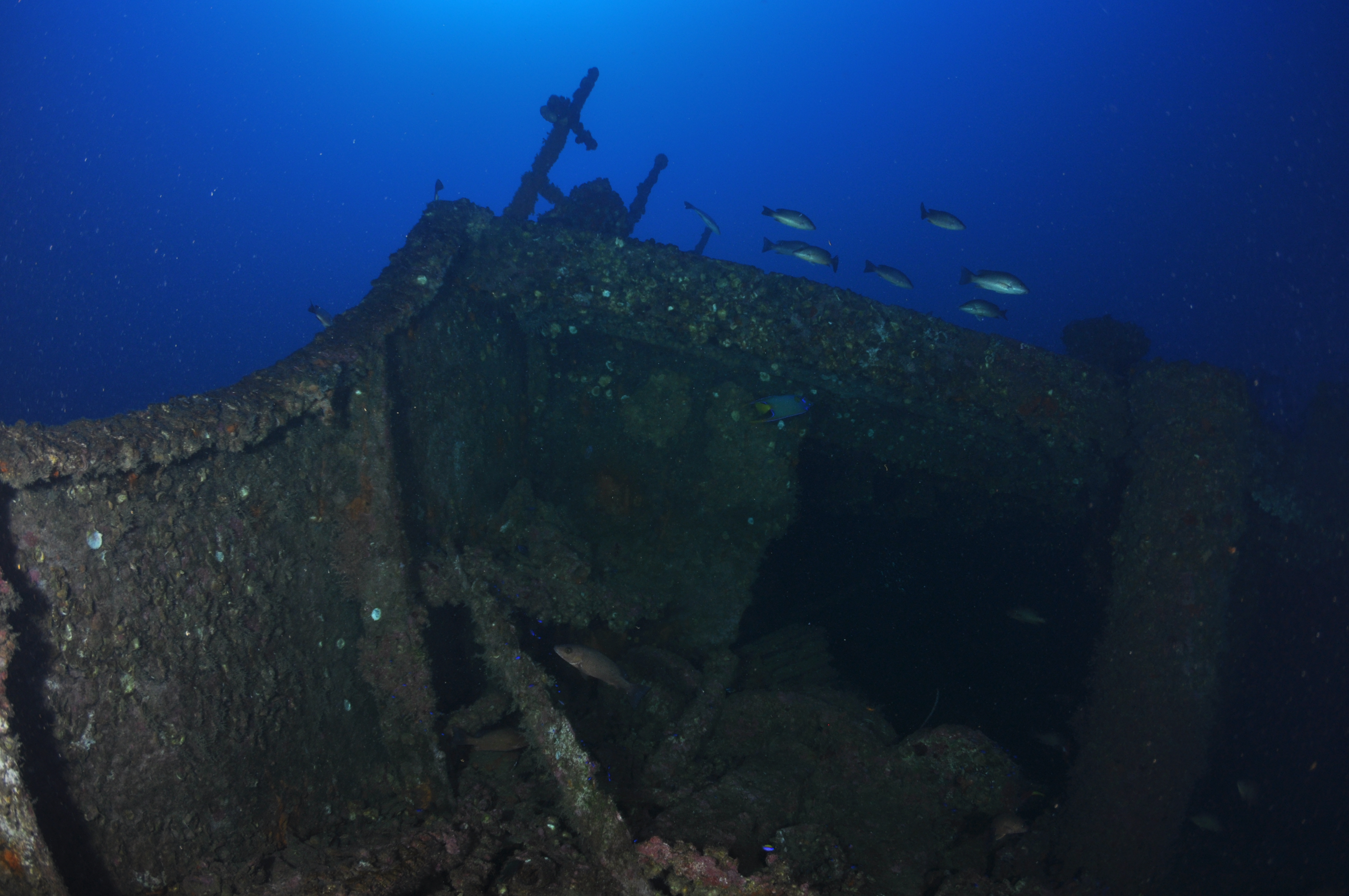
This huge German freighter was built in 1928 in Bremen Germany for the Hamburg Amerika Line and in mid-1940 found itself interred in the neutral port of Tampico, Mexico along with two other German freighters. During an attempt to break out of the Mexican port and escape home to Germany, the Rhein was shadowed by US destroyers who vectored in the British flagged Dutch warship, the Van Kinsbergent to intercept the freighter. The United States had not as of yet entered the fray that would soon become World War Two, and was in effect and name a neutral. This action by US Naval vessels committed a gross violation of neutrality by informing a belligerent to the German vessels disposition, in effect bringing the lamb to slaughter. The Dutch warship fired upon the unarmed freighter to make her stop, which prompted the German crew to set fire to and scuttle their ship rather than surrender it the enemy. Another British vessel, the H.M.S. Cardoc, soon arrived on the scene and put 22 six-inch shells in the furiously burning Rhein . As the German vessel settled slowly to the bottom, she was hissing and popping as sea water snuffed out the fires and cooled the near molten steel , the ship landing upright and intact on the sandy seafloor 250 feet below.
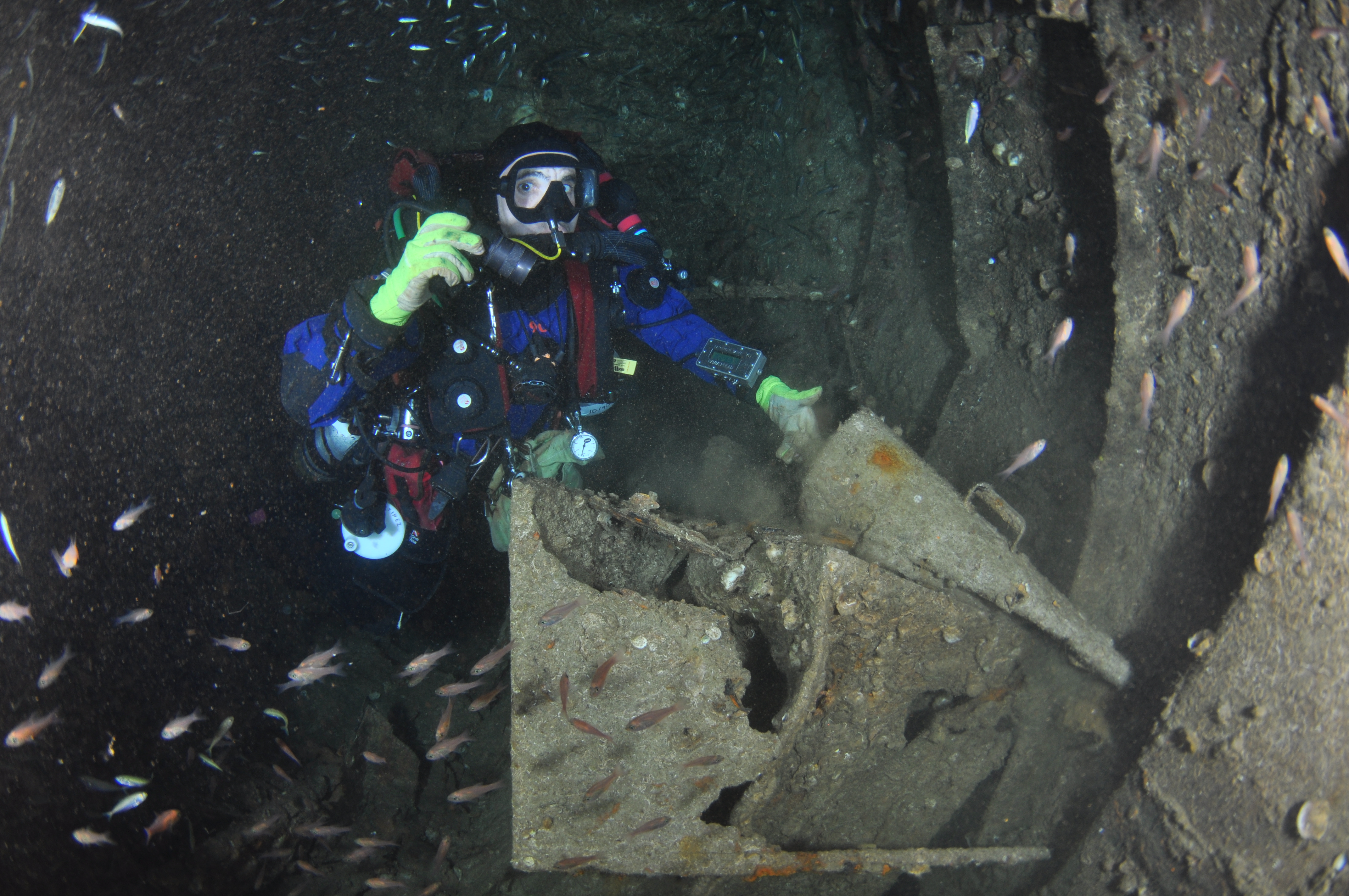

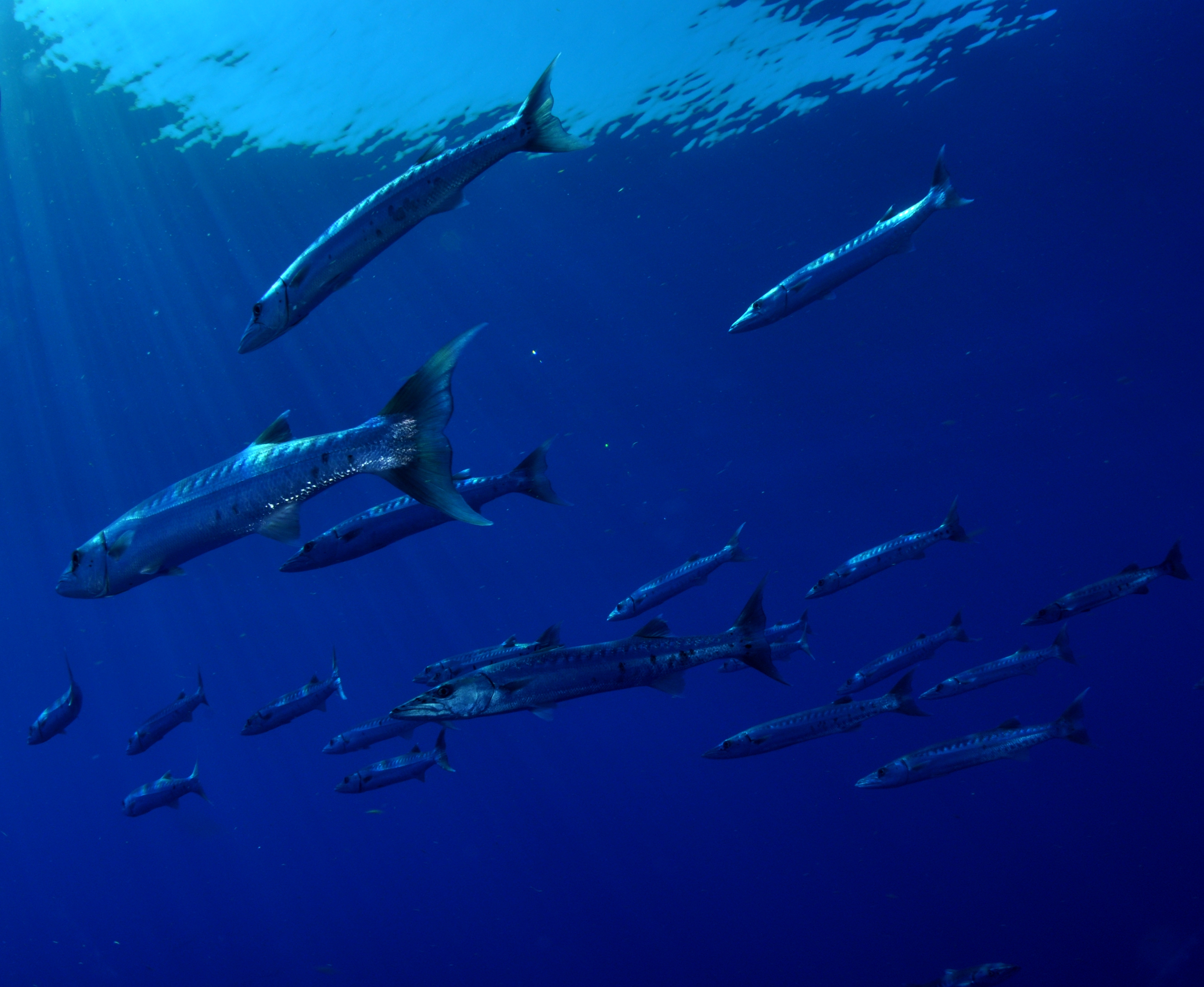
The most visually stunning feature of the Rhein is the intact Kingpost which rises nearly seventy feet above the main deck. Virtual clouds of baitfish swarm and circle round the huge posts while large amberjack and barracuda torpedo through and chase the bait ball from one side to another…a never-ending ballet of life and death. Down on the deck ridiculously large goliath grouper, some the size of compact cars, lumber round huge winch drums, and many of these behemoths amble off and find their way into some the deepest recesses of the ship. If you get too close the grunt at you with a bellowing bark, as if to say back off….you listen. And everywhere else you look are stingrays with 5-6 ft wing spans gliding above your head, turtles slumbering under deck winches and yawning moray eels giving you that look. There are literally times when the sun above you is blotted out by the massive schools of fish passing overhead.
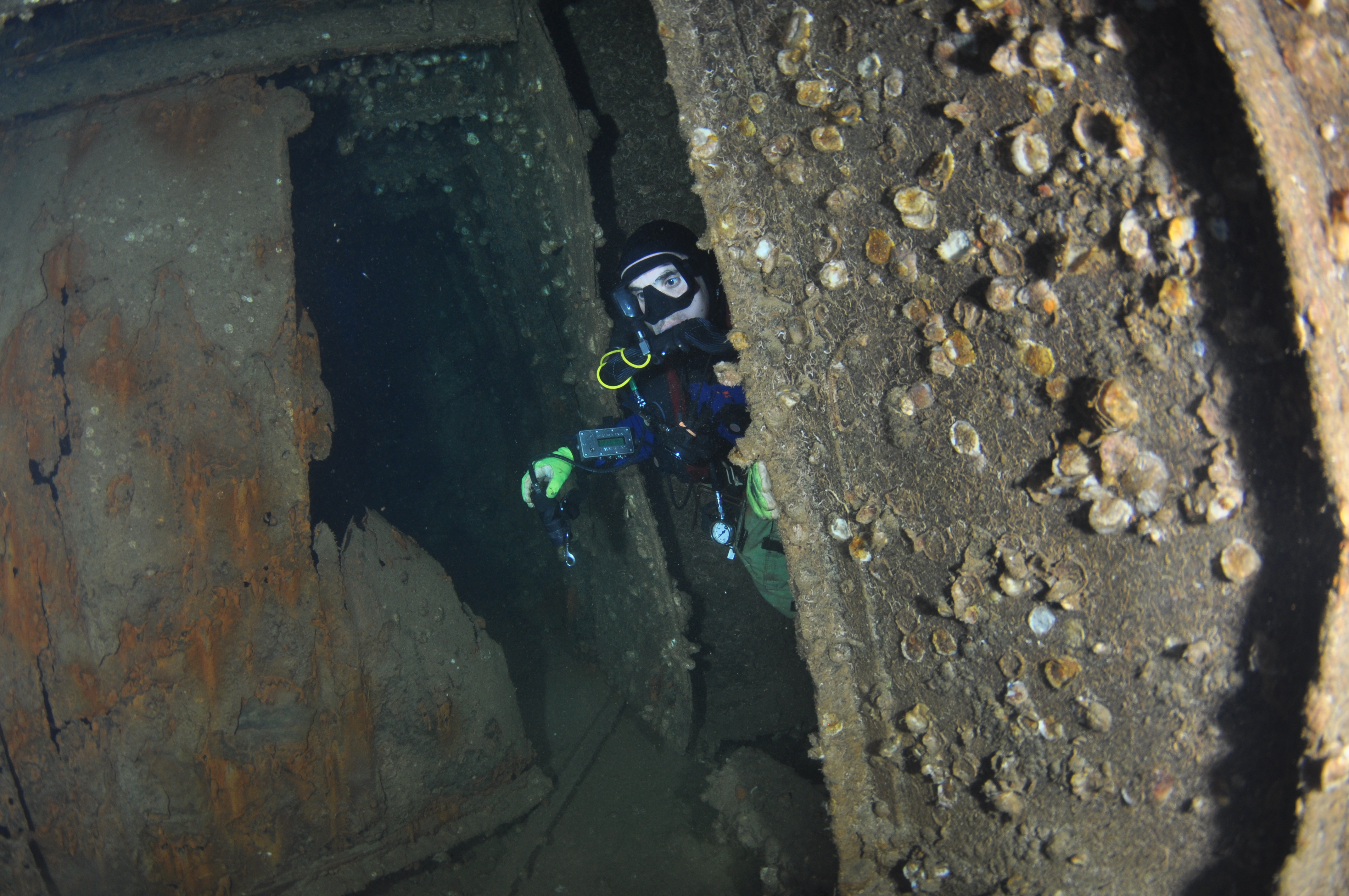
If penetration is something you like the three cargo decks in the fwd and after holds are cavernous spaces that achieve a near cathedral like effect with ambient light streaming from open holds and missing hull plates and you can travel nearly half of the Rhein’s 450 ft length without coming out of the holds. The forecastle, engine room, and after deckhouse section all provides a more intense penetration for those so trained and inclined. The massive size of the wreck and the prolific marine life all combine to make the Rhein the crown jewel amongst Dry Tortugas technical wreck dives.
Araby Maid, Dry Tortugas
For wreck divers in the Great lake region of the United States, or the equally frigid Baltic Sea explorers, diving an intact 1800’s era sailing vessel is not unheard of, as a matter of fact it’s becoming almost commonplace…but not so in the warm temperate regions on the Caribbean sea and Gulf of Mexico, where a combination of hurricane strength storms, terado worms (the equivalent of an underwater termite), and warm salt water whittle such wooden hull shipwrecks down to mere stubs. And in this warm bath even steel hulled schooners break down to piles of rubble. But not so for the beautiful Araby Maid.
At the turn of the century it didn’t take too much foresight for those in the business of shipping, to see that the advent of the steamship, with its new dependable engines, faster speed, and greater cargo capacity sounded the death knell for the age of sailing vessels. For the Araby Maid it was a literal collision of the past and the future that sent her to eternity in the Dry Tortugas. On November 21, 1903 the steam ship S.S. Denver smashed into the starboard side of the iron hulled bark, cleaving a neat triangular shaped wound that quickly sent the thirty-five year old sailing ship along with two of her crew to a watery grave.
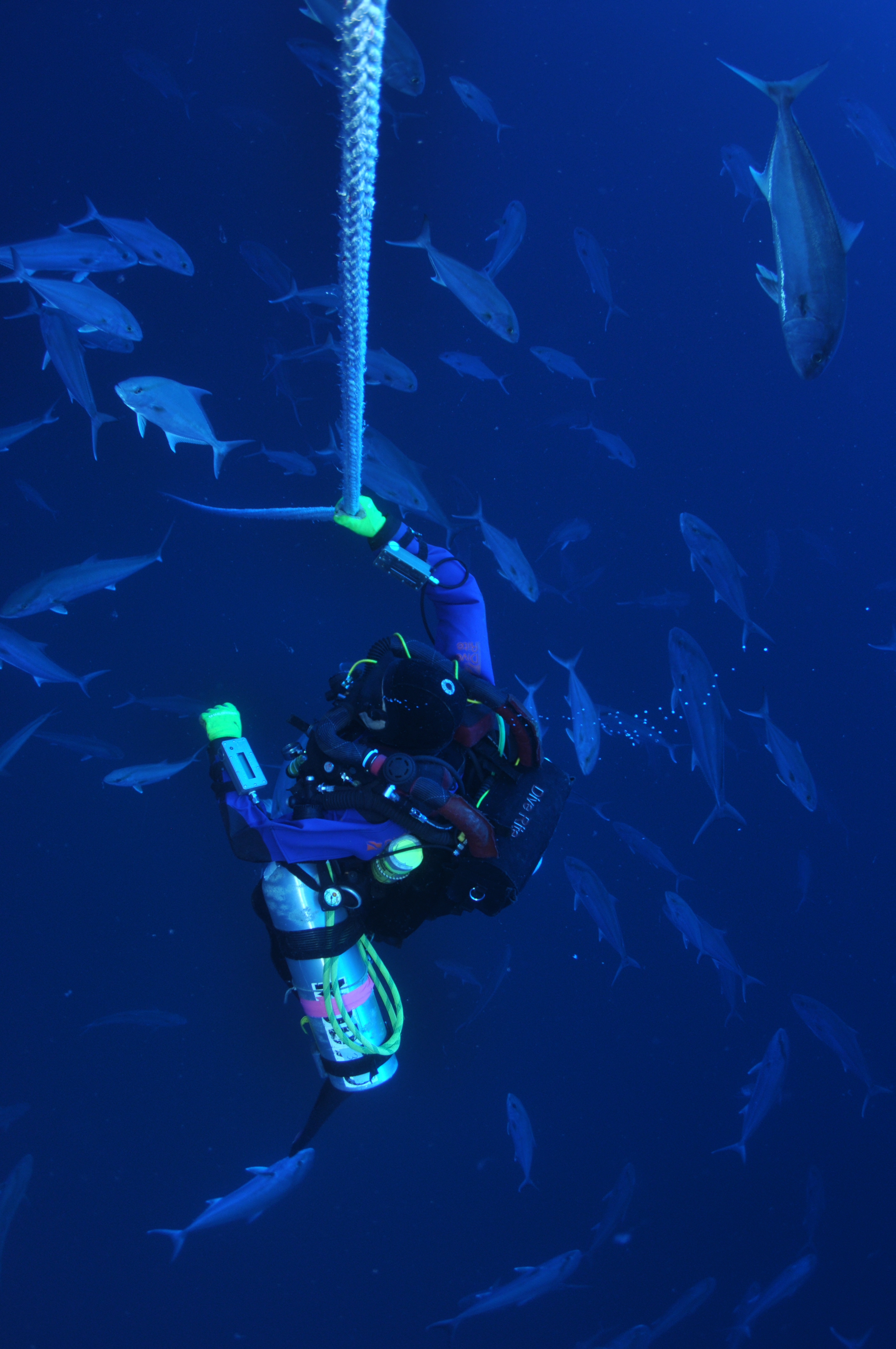
Resting eternally at 220 feet she has somehow faired many a hurricane season and rode them out in an amazingly intact fashion. Yes her upper deck is gone and her steel masts have fallen aside, but her hull rises straight and proud, her rudder still sits in place, hard over in a starboard turn for eternity. Her lower wooden decks have somehow resisted the ravages of the terrado worms and she holds many bits and piece of her history for those who wish to poke about amongst the years of discarded oyster shells, which cover her deck up to two feet deep at places. She appears to have either been in ballast or was carrying a cargo (such as wheat) that has since vanished. Rummaging through the debris on the main deck one finds an old bottle, bit of crockery, deck prisms, shoe buckles and a fork, a lantern and sextant…the remains of the bygone era and the day to day existence on a sailing vessel.
U-2513, Dry Tortugas
The U-2513 is a Type XXI German U-Boat, a new super weapon that the Nazis hoped could stave off destruction of the Third Reich and possibly turn the war in their favor. Although it was a quantum leap in submarine design, the new wonder weapons were too little, too late and unable to effect the outcome of the war. The U-2513 was built in late 1944 and sailed from the Blohm and Voss shipyard in Hamburg Germany in March 1945. Although the boat was sea ready, the U-2513 surrendered to the victorious allies at the
end of the war having never made a war cruise. A detachment of 200 American submariners had been formed into a special unit called the Rainbow division and were tasked with bringing the captured German wonder weapons back to the United States for further testing and study. After a few months learning the U-boats new and strange technology (and the German language), two of the Type XXI submarines, U-2513 and U-3008, sailed to the US from the continent. First stop was at the submarine base in New London Connecticut for dry docking and total “Americanizing” of the labels and tags. Then the U-2513 traveled to Key West Florida for further testing where at one point then President Harry Truman made a 450 ft dive aboard the war prize. For the next few years the Type XXI systems were tested and ultimately influenced all future American submarine designs. After three years of service in the US Navy the U-2513 was sent on her last dive by the anti-submarine rockets fired from the US destroyer Robert. A Owens.
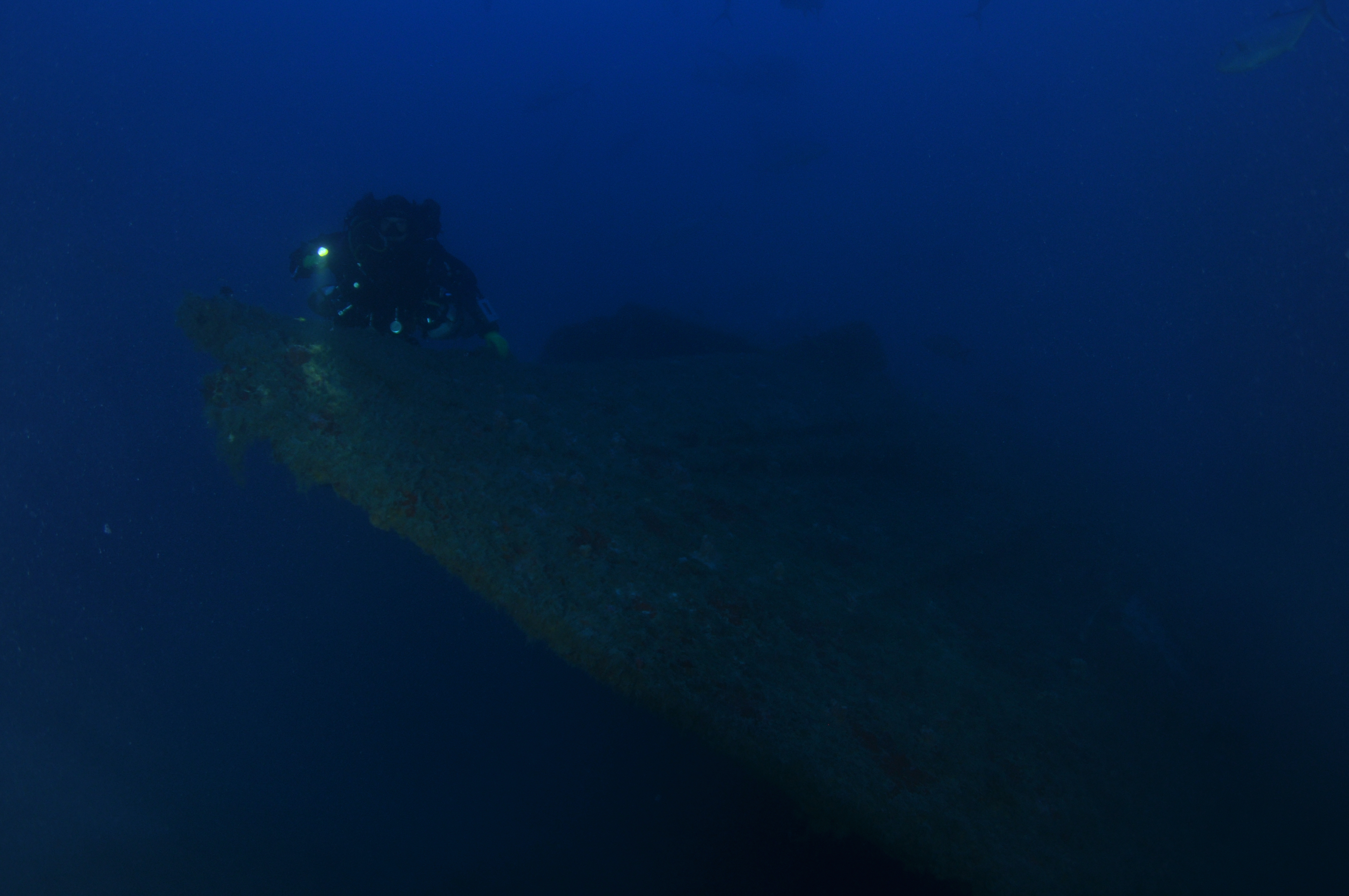
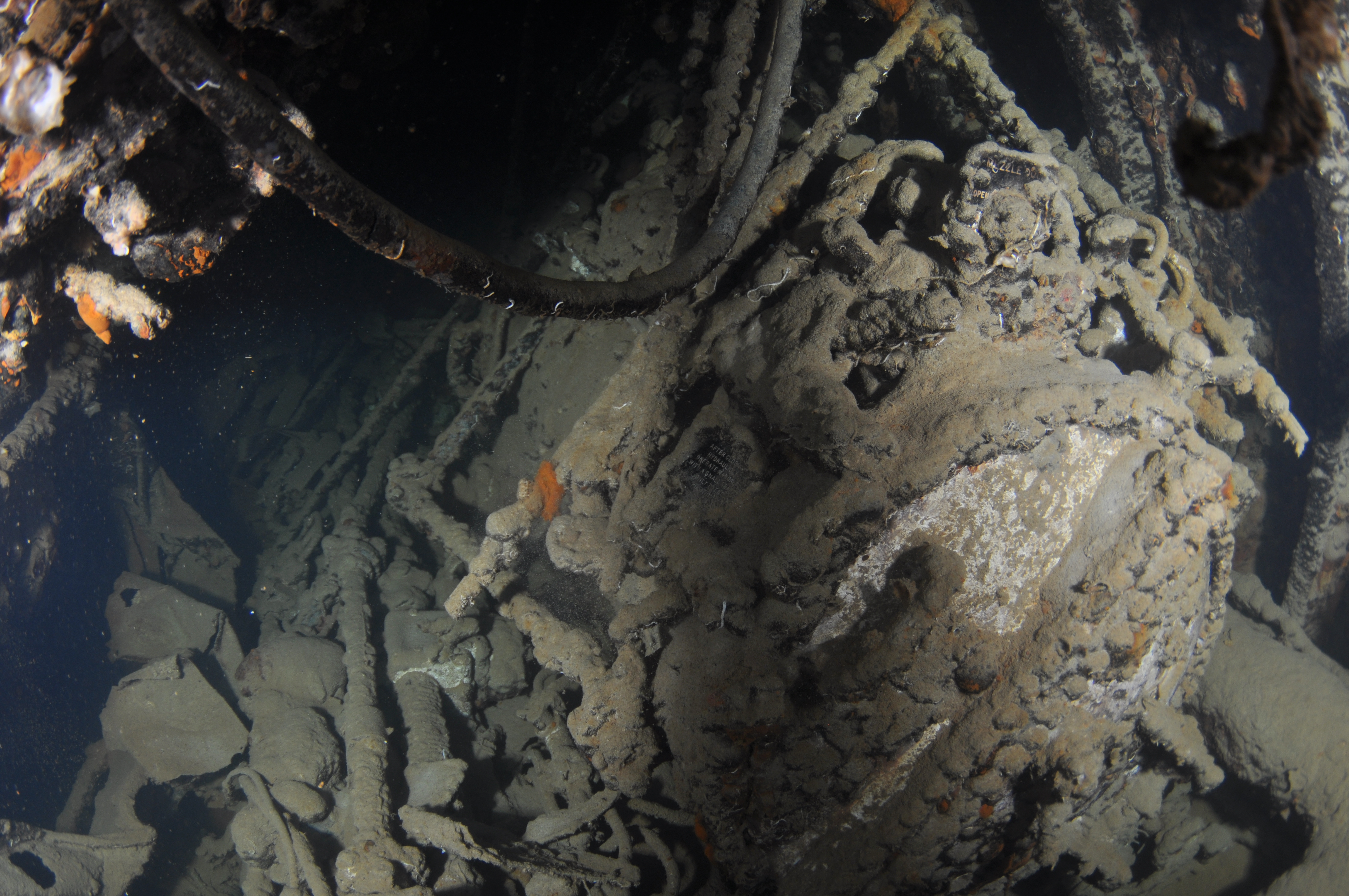
Today the wrecked submarine lies on a very fine silt bottom, which is easily disturbed. Both live and expended rocket’s, as well as hedge-hog anti-submarine weapons lie on and around the entire wreck, making anchoring around the wreck a risky proposition. The submarines streamlined outer hull has mostly rusted away in the warm salt water leaving the inner pressure hull exposed. Two large damage areas, both fore and aft of the conning tower show the effective destructive power of the Robert A. Owens anti-submarine rockets. Penetration is possible only in the forward compartment, where the torpedo tube doors and all related instructions, gauges and piping are all marked in English writing, all due to the “Americanizing” of the German U-2513. Swimming around the entire wreck it’s easy to make out all features of the Type XXI that define it as the first true modern submarine. NEW FINDINGS!
Chelsea
Recently discovered by Mike Barnette and the intrepid AUE team, the Chelsea was a large ocean going tug boat. Built at the turn of the century the Chelsea is only a recent addition to the Dry Tortugas, foundering while in tow just six years ago. I recently visited the wreck with Mike in July 2011 and found her to becoming quickly covered by coral and marine growth. The wreck is at time almost obscured by huge Jewfish, schooling amber jacks and walls of baitfish. Totally intact and upright, you can still read the vessels name and home port on the stern. For more details about this wreck, her interesting “movie” career and subsequent loss look for Mike Barnettes upcoming article in a future issue of WDM.
Key West Ghost Fleet
In the waters between the Dry Tortugas and Key West lie the remains of the “Key West Ghost Fleet”, decommissioned US Naval vessels that were dispatched for various weapons tests. A humble salvage tugs like the USS Curb, (185 ft) has been forever saved for technical divers alongside sleek and dangerous destroyers like the , USS Berry (350 ft), USS Kendrik,(320 ft) and the USS Saufley (420ft) . But by far the the biggest and most popular of the Key West Ghost Fleet is hands down, the light cruiser USS Wilkes Barre( 250ft). For each of these seasoned warships, it seems a much more fitting end to go down by fire, then to rust away in a backwater mothball fleet awaiting the inevitable 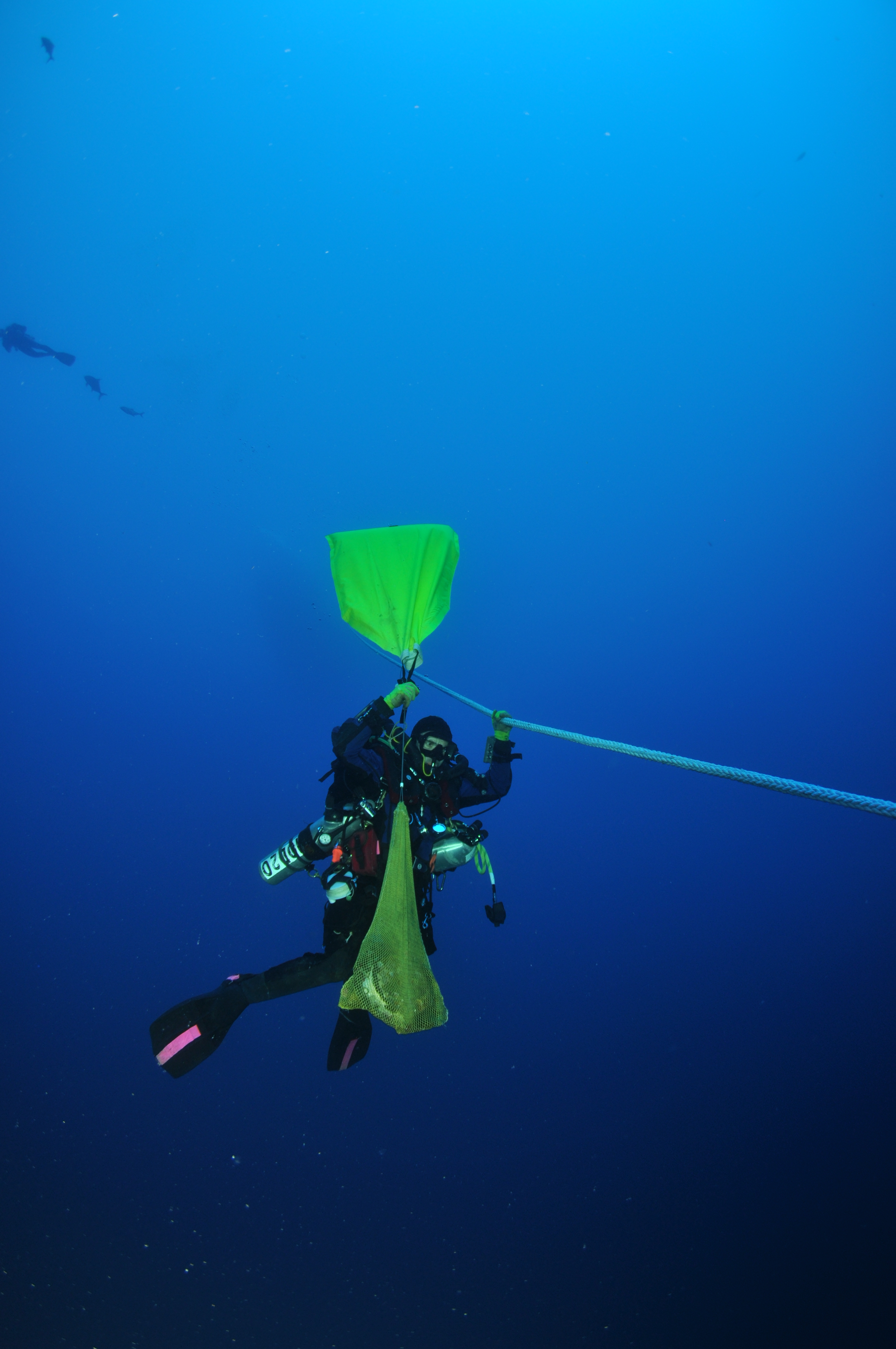 scrapyard torch. Each is a unique and challenging technical dive, as none of the dive sites are the same. Due to the extreme depth only a handful of divers have ever visited the deeper destroyer wrecks and even the “shallower” wrecks like the USS Curb and USS Wilkes Barre lie in an area frequented by the heaviest flow of the Gulf Stream, which can be so strong at times that diving the wreck is simply not possible. That being said, diving the Wilkes, whose stern section sits upright bristling with guns and massive superstructure is certainly a must see/do for any technical wreck diver visiting Key West. Of all the Ghost Fleet my favorite is small and seldom visited…it is the S-16.
S-16
The keel of the S-16 was laid by the Lake Torpedo Boat of Bridgeport Connecticut in March 1918, but the war for which she was built would end before she was commissioned into the US Navy on December 17, 1920. At the time of her launch she was the largest vessel of her class, measuring it at 231 feet long. With four torpedo tubes, a five inch deck gun, a diving depth of 200 ft and a maximum surface speed of 15 knots, she was the most contemporary design of the “S”Class during wartime submarine production. She proudly served in the post Great War years patrolling the vast wastes of the Pacific, reflecting Americas reach and interest’s in the region until she was decommissioned in 1935 and put into mothballs. Five years later, as war loomed again in Europe and storm clouds gathered over Asia, the S-16 was brought back into service and like many of her sister “S” and “O” class submarines of World War One vintage, she underwent refits to update her systems, but these technically antiquated boats were most oftenrelegated to training and coastal patrol functions. The S-16 was quickly deemed seaworthy and ordered to the Panama Sea Frontier to patrol and protect the approaches to the Panama Canal. In a near deadly case of mistaken identity she was almost destroyed in July 1942 when an Army Air Corp bomber mistook the S-16 for a German U-boat. Straddling the surfaced submarine with a brace of depth charges, the pilot banked round to engage the target with machine guns when a large American flag was waved from the after hatch staved off his attack. Fortunately there were no injuries and the damage to the submarine was minor. The S-16 would later transfer to Groton Connecticut where she served until she was decommissioned from service in October 1944. After 25 years of service for her country, the S-16 had one last mission to accomplish. Designated to be used as a target for weapons testing, the veteran submarine made her last dive and was sunk southwest of Key West on August 3rd 1945 in 260 feet of water.
Today the S-16 sits upright and intact with a slight list to starboard. Unlike many other World War Two era submarine wrecks, the streamlined outer hull surrounding the pressure hull and shearwater fairing on the conning tower are intact and in remarkable conditions. Covered with a light layer of soft and hard coral and festooned with long sea whips she is an impressive sight to behold. The bow and stern rise proud from the seafloor due to her very deep keel design and divers can swim underneath the bow torpedo tubes or under the stern propellers and get a close up detail of the “S” class submarines unique “whale tail” stern diving plane and rudder assembly . There are three open hatches; one in the forward torpedo room, one in the conning tower and the last is in the stern maneuvering room. Access to the forward torpedo room and conning tower require removal of your gear in order to fit into the tight hatch openings. The stern hatch is large enough to allow divers access with all gear on. All the water tight doors leading to the engine room, control room and crews quarters are locked down tight, but efforts are under way to try and open the hatches and peek even further inside this 1945 time capsule. Like many of the wrecks here schools of amber jack rise to meet you and escort you up and down the line, looking for a handout, or just curious about the most recent visitors to the venerable S-16
Getting there…
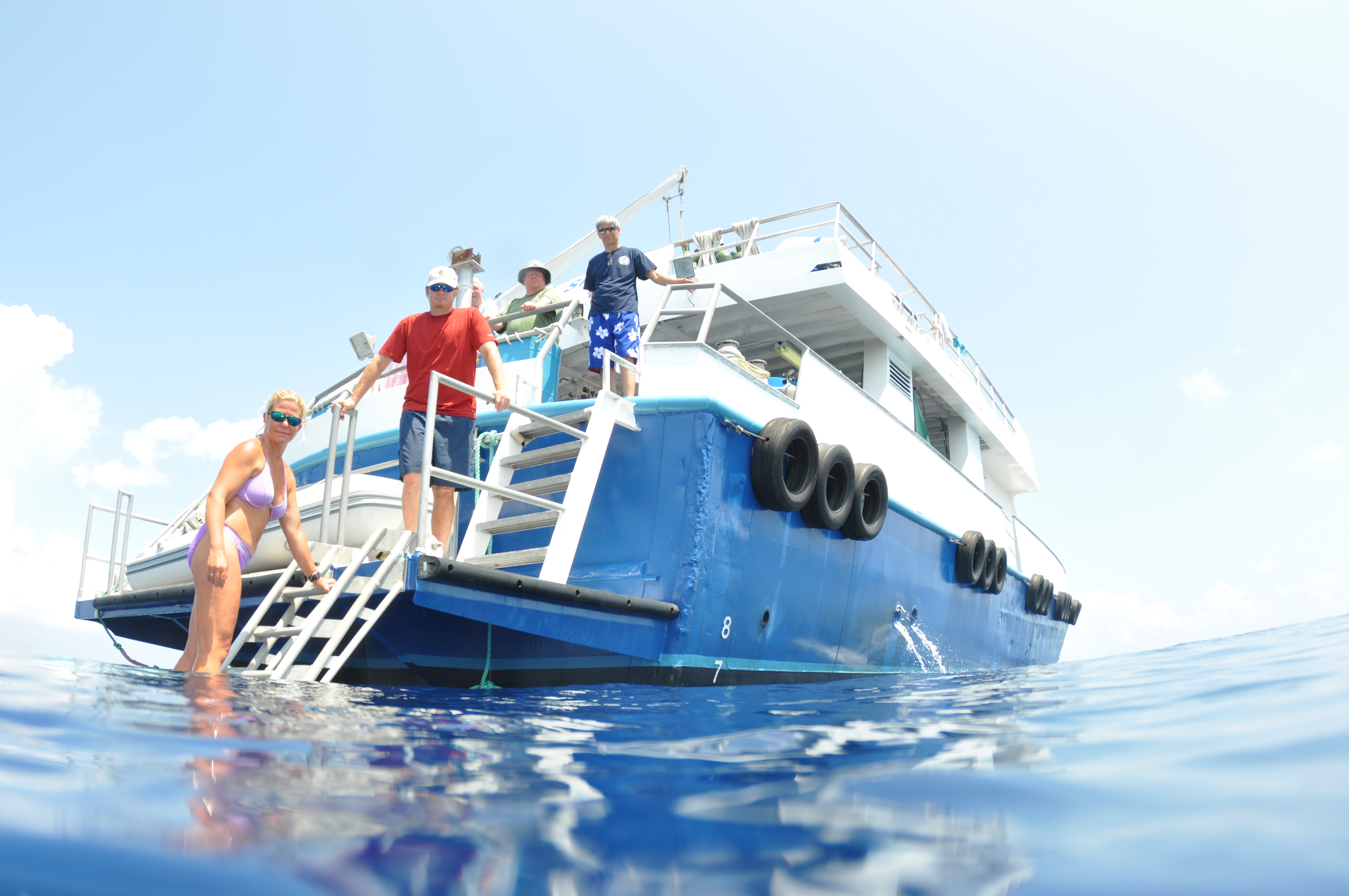
The distance from Key West can make travel to the DryTortugas difficult for smaller vessels and makes this National Park, and the waters that surround them, one of the least accessible for visitors. Although you can find small vessels willing to make a day run, your best option for visiting the wrecks is a live aboard. There are currently two options for divers to choose from, the MV SPREE and the ULTIMATE GETAWAY. Both are full service dive vessels that cater to technical divers, can providing rental equipment, breathing and deco gas and are fully versed in all the bells and whistle for full blown tech divers. Each has a remarkably unique way of doing things and I hope you have an opportunity to give each of them a try….tell em Richie sent you!
Spreeexpeditions.com
Ultimategetaway.net